Binance vs KuCoin Feature Matrix & Side-by-Side Breakdown
If you put Binance and KuCoin side by side, the biggest difference is not simply which exchange charges less. It is what each platform makes easier. Binance is built around a broad trading ecosystem with substantial liquidity in major markets, while KuCoin puts considerable emphasis on altcoin discovery, retail-friendly automation, and tools for traders who want to experiment with different strategies.
Here is the practical comparison. Treat the figures as baseline reference points rather than a promise that every market, account, or region receives the same terms. Exchange fees and product availability can change, so I recommend checking the official schedules before placing a trade.
| Feature | Binance Global | KuCoin Global |
|---|---|---|
| Main strength | Major-market liquidity and a broad trading ecosystem | Built-in bots and access to a broad range of altcoins |
| Standard spot fee for many Class A pairs | Commonly 0.10% maker / 0.10% taker | 0.10% maker / 0.10% taker at VIP 0 for Class A |
| Discount using native token | Up to 25% off eligible spot and margin fees when BNB deduction is enabled | 20% spot discount through KCS fee deduction, subject to applicable terms |
| Class B and C spot fees | Generally based on the applicable pair and account fee tier | Higher base rates can apply to Class B and C tokens |
| Futures reference rate | Often competitive, but the exact contract, tier and promotion matter | VIP 0 reference rate is 0.02% maker / 0.06% taker |
| Automated trading | Grid, DCA, rebalancing, arbitrage and other bot strategies, depending on availability | Spot Grid, Futures Grid, Infinity Grid, Smart Rebalance, DCA and other strategies, depending on availability |
| Token ecosystem | BNB utility, fee benefits and eligible ecosystem campaigns | KCS fee benefits and a token-holder reward ecosystem whose terms can change |
| Reserve transparency | Proof of Reserves with Merkle-tree verification and zk-SNARKs, plus SAFU | Published Proof of Reserves and user self-verification tools |
| U.S. access | Binance.com is not the U.S. service; Binance.US is separate and geographically limited | KuCoin’s global terms restrict U.S. residents |
For the fee figures above, consult the current Binance trading fee schedule and KuCoin VIP fee structure. Binance’s official BNB fee-discount guide explains that the discount requires BNB in the relevant wallet and the fee-deduction option to be enabled. KuCoin’s published fee table distinguishes Class A, B and C spot markets, so checking a token’s classification is especially important when trading smaller assets.
Which exchange wins for which type of trader?
- You mostly trade BTC, ETH and other large markets: Start by comparing liquidity, order-book depth, spreads and the exact fee tier. Binance is often a strong candidate, but the best execution price on a specific pair matters more than a brand-wide claim.
- You regularly trade perpetual futures: Compare both the maker and taker rates, funding payments, leverage limits and liquidation rules. A lower advertised taker fee does not automatically make a leveraged position cheaper overall.
- You want bots without building your own infrastructure: KuCoin is worth a close look because its native bot menu is prominent and varied. Binance also offers an extensive native bot suite, so this is a comparison of workflow and features rather than a simple winner-versus-loser verdict.
- You search for newly listed or small-cap tokens: KuCoin’s Class B and C markets can expand your choices, but some of those markets have higher fees, thinner order books and greater price-impact risk.
- You are choosing primarily on safety: Neither a reserve report nor an emergency fund should be treated as a guarantee. Evaluate custody, legal access, withdrawal reliability, account security and how much money you actually need to keep on an exchange.
Binance’s Fee Model vs KuCoin’s Asset Classes

Trading fees can look tiny on a screen, especially when you are making a small purchase. Once you start turning over thousands of dollars every day, though, even a difference of a few basis points can become meaningful. The trick is to compare the fee that applies to your actual order, not the most attractive number in a marketing banner.
Spot and perpetual futures
A maker order adds liquidity to the order book, typically by resting as a limit order that does not execute immediately. A taker order removes available liquidity by matching against an existing order. A limit order is not automatically a maker order: if it executes immediately, it may be charged at the taker rate.
For many Binance spot markets, the standard reference rate is 0.10% for both maker and taker orders. KuCoin’s VIP 0 rate for Class A spot markets is also 0.10% maker and 0.10% taker. That makes the basic spot comparison look like a tie until token discounts, VIP status, pair-specific rules and promotions enter the picture.
| Example order | Rate used | Fee on a $10,000 order |
|---|---|---|
| Binance standard spot | 0.10% | $10 |
| Binance spot with an eligible 25% BNB discount | 0.075% | $7.50 |
| KuCoin Class A spot at VIP 0 | 0.10% | $10 |
| KuCoin Class A spot with an eligible 20% KCS discount | 0.08% | $8 |
| KuCoin Class B spot at the 0.20% baseline | 0.20% | $20 |
| KuCoin Class C spot at the 0.30% baseline | 0.30% | $30 |
These are illustrations of the listed rates, not estimates of every possible fee. They exclude spread, slippage, deposit and withdrawal charges, funding, taxes, and any special campaign that changes the applicable price.
The spot discount calculation is straightforward. A 25% reduction from 0.10% produces a 0.075% fee; a 20% reduction from 0.10% produces 0.08%. On a $10,000 order, the difference between those discounted rates is only 50 cents. For a trader executing $1 million in eligible spot volume, however, the difference would be $50 before accounting for other costs. This is why high-turnover traders should model fees against their actual volume rather than dismissing small percentages as irrelevant.
Now consider perpetual futures. KuCoin’s official VIP table lists a baseline of 0.02% maker and 0.06% taker for futures at VIP 0. Binance’s published rates vary by product and fee tier; the exact contract schedule should be checked before treating any headline number as universal. If the applicable Binance taker fee is 0.05%, it is one basis point below KuCoin’s 0.06% reference rate.
Suppose you open a $100,000 notional position and your order is charged the taker fee. At 0.05%, the trading fee is $50; at 0.06%, it is $60. The nominal difference is $10 for that execution. If you later close the same notional position with another taker order, another fee applies, potentially making the round-trip difference $20, assuming the notional amount and rates remain unchanged.
That last assumption matters. In a real leveraged trade, the closing notional may be different because the market moved, and funding payments can add to or offset the trading cost. Liquidation charges, contract specifications and VIP status may also change the final result. The example is useful for understanding fee arithmetic, not for predicting the total cost of a futures position.
Why the lowest headline fee is not always the cheapest trade
When I compare exchanges, I look beyond the percentage printed beside the Buy or Sell button. Your real execution cost can include:
- Trading commission: The explicit maker or taker fee charged by the exchange.
- Spread: The gap between the best available bid and ask. A wider spread can outweigh a small commission discount.
- Slippage: The difference between the price you expected and the average price at which your order actually fills.
- Funding: For perpetual futures, periodic payments between long and short positions under the contract’s funding mechanism.
- Withdrawal costs: Network fees or platform withdrawal charges when you move assets off the exchange.
- Conversion costs: If you first convert fiat or one token into another, the conversion price and fee may add another layer of expense.
Liquidity is particularly important for larger orders. Imagine that Binance charges a slightly lower commission on a major BTC pair, but your chosen KuCoin altcoin has a thin order book. You could still pay more in slippage on KuCoin—or, in a different market, receive better execution there because more liquidity is available at the price you need. The answer depends on the pair and the time of execution, not just the exchange name.
For an apples-to-apples test, compare the same asset pair, order size, order type and time window on both platforms. Record the displayed bid and ask, estimated fill price, trading fee and any funding or withdrawal costs. If you trade frequently, run the comparison over multiple sessions instead of relying on a single screenshot during a quiet market.
Understanding KuCoin’s Class A, B and C fee schedules
One of the most important details in the Binance vs. KuCoin fees 2026 comparison is KuCoin’s asset-class structure. Not every spot token has the same base fee. At VIP 0, the official fee table lists these reference rates:
| KuCoin spot classification | Maker fee | Taker fee | What it means in practice |
|---|---|---|---|
| Class A | 0.10% | 0.10% | Standard baseline for many major markets |
| Class B | 0.20% | 0.20% | Higher baseline commission |
| Class C | 0.30% | 0.30% | Highest of these three baseline categories |
Source: KuCoin’s official VIP fee table. The classification of individual tokens can change, so do not assume that an asset remains in the same class indefinitely.
At these baseline rates, a $10,000 taker order in a Class A market costs $10; the same order at a 0.20% Class B rate costs $20, while a Class C order at 0.30% costs $30. That is a threefold difference between Class A and Class C before discounts or other trading costs. For someone making repeated entries and exits in a small-cap token, the extra fee can eat into an already narrow profit margin.
This is not necessarily an argument against trading Class B or C assets. Smaller tokens may be exactly what a trader wants to research, and higher fees can reflect the exchange’s asset-specific pricing structure. The point is to know the class before you trade. Check the pair’s current fee rate, confirm whether your KCS discount applies to that order type, and review the expected spread and order-book depth. KuCoin’s documentation also states that KCS fee deduction does not apply to its Spot Trading Bot strategies, which is another reason to inspect the rules for the product you intend to use.
The takeaway is simple: Binance’s standard spot pricing may feel easier to estimate across many markets, while KuCoin requires more attention to token classification. If you mainly trade major coins, the difference may be modest. If your strategy depends on rotating through micro-caps, the class-based fee schedule belongs in your risk calculation from the beginning.
BNB Fee Discounts vs KCS Rewards
BNB and KCS are not just exchange-branded coins. Both are tied to platform incentives, but the benefits are structured differently, and the value you get depends on how you use the exchange. If you trade actively, a fee discount can have a measurable effect on costs. If you buy a token primarily for potential rewards or price appreciation, you are taking on an additional investment risk that should be evaluated separately from the exchange’s trading features.
Holding BNB: Fee savings and ecosystem access
BNB is the native token of the Binance ecosystem. One of its most direct uses for an exchange customer is paying eligible trading fees at a discounted rate. Binance’s official BNB deduction guide, updated in 2026, describes discounts of up to 25% on eligible spot and margin fees and up to 10% on eligible futures fees, subject to the applicable terms.
For a standard 0.10% spot trade, a full 25% discount would reduce the fee to 0.075%. That sounds simple, but you need to enable the relevant fee-deduction setting and keep enough BNB in the appropriate account. If your BNB balance runs out, or a particular product or promotion has different rules, you should not assume the discount will continue to apply.
BNB also has a wider role across the Binance ecosystem. Depending on eligibility and regional availability, users may encounter BNB-based benefits associated with Launchpool, Megadrop or other token-distribution campaigns. These can provide access to new projects or campaign rewards, but they are not guaranteed returns. Each campaign has its own requirements, timing, eligible assets and risk profile, so check the relevant official announcement before committing funds.
Here is how I would assess the practical value of BNB for trading:
- Estimate the fee savings first. Calculate the difference between your current commission and the discounted rate using your actual monthly volume.
- Account for BNB price volatility. If you buy BNB solely to save a few dollars in fees, its market price can move by more than the savings you earn.
- Check the setting and product rules. A discount shown for spot trading should not automatically be assumed to apply to every futures contract, bot, conversion or special market.
- Separate utility from investment conviction. You can value BNB for its fee utility without assuming its price will rise.
For example, suppose you execute $100,000 of eligible spot volume in a month at 0.10%. Your baseline fees would total $100. If the full 25% discount applies, your fees fall to $75, saving $25. That is a clear calculation—but if you buy a substantial amount of BNB to qualify for that saving and its price falls, the token loss could dwarf the benefit. The right amount of BNB to hold, if any, depends on your trading volume and risk tolerance.
Holding KCS: Spot discounts and the daily-bonus question
KCS is KuCoin’s native token and can provide fee-related benefits. KuCoin’s published VIP fee structure lists a 20% spot discount through KCS fee deduction at the entry-level schedule, with additional loyalty benefits shown separately. On a Class A spot order whose baseline fee is 0.10%, a 20% discount reduces the fee to 0.08% when the discount is eligible and properly applied.
The arithmetic is useful, but there is a detail traders should not overlook: KCS discounts do not necessarily apply to every asset class, trading product or bot strategy. KuCoin’s trading bot fee rules state that Spot Bot users receive a 20% discount on the maker/taker fee rate of the selected coins at the LV0 level, while KCS fee deduction does not apply to those bots. Futures strategies use a separately stated fee rate. Before you calculate your expected costs, check the rule for the exact product you intend to run.
You may also encounter older descriptions of the KCS Bonus, including claims that holders with at least six KCS receive a daily distribution funded from 50% of KuCoin’s daily trading-fee revenue. This mechanism has been part of KCS’s historical incentive model, but historical explanations should not be treated as a guarantee that a particular threshold, payout formula or eligibility rule remains unchanged in 2026. The current terms for any reward program should be verified directly before buying KCS in expectation of passive income.
That distinction matters because a daily distribution and a trading-fee discount are not the same thing. A fee discount reduces a cost when you trade; a reward program may pay eligible participants according to its current rules and the activity or revenue used in its calculation. Neither should be confused with a fixed-yield savings account. Reward amounts can vary, eligibility can change, and the market price of KCS can fall.
A sensible comparison is therefore:
| Question | BNB | KCS |
|---|---|---|
| Main direct exchange benefit | Discount on eligible fees when BNB deduction is enabled | Discount on eligible spot fees through KCS deduction |
| Baseline spot example | 0.10% reduced to 0.075% with a full 25% discount | 0.10% reduced to 0.08% with a full 20% discount |
| Broader incentives | Eligible Binance ecosystem campaigns, subject to their terms | KCS-related reward and loyalty mechanisms, subject to current terms |
| Main risk when held for utility | Token price volatility can outweigh fee savings | Token price volatility can outweigh fee savings or variable rewards |
| What to verify | Fee toggle, eligible market, campaign terms | Token class, KCS deduction eligibility, bot rules and current reward terms |
For me, the best approach is to start with a clear calculation: how much will you save by holding the token, and what is the maximum amount of token exposure you need to obtain that benefit? If the expected savings are tiny relative to the amount you would have to buy, there may be little reason to hold a large balance just to unlock a discount.
KuCoin’s Broader Discovery Tools vs Binance’s Trading Ecosystem

A larger token catalogue is useful only if it helps you find markets that match your strategy. It is not automatically a sign of better quality, and it does not guarantee that a token will perform well. The same principle applies to trading bots: more automation can make execution easier, but it does not turn a weak strategy into a profitable one.
KuCoin’s GemBox and the search for early-stage altcoins
KuCoin has marketed itself to traders interested in emerging projects and assets beyond the most established cryptocurrencies. Its GemBox feature should be understood as a discovery tool rather than a promise of early access to every promising token. KuCoin’s GemBox explanation describes a feature that highlights coins based on recent trading activity and trader popularity, with the platform calculating popular coins at regular intervals.
That is a narrower claim than saying GemBox is a reliable way to find a future 100x asset. A coin can become popular because of a positive announcement, a rapid price spike, a listing event or a burst of speculative attention. Those signals may help you identify what the market is watching, but they do not establish the project’s long-term value, the quality of its code or the sustainability of its token economics.
I would use GemBox as the beginning of a research process, not the conclusion. When a token catches your attention, investigate the project before placing an order:
- Read the project’s documentation. What problem is it trying to solve, and is there a working product or only a roadmap?
- Check token supply and unlocks. A low circulating supply can make the market capitalization look small while a large amount of future supply remains locked.
- Examine liquidity. Look at order-book depth and trading volume, not just the latest price or the headline 24-hour volume.
- Check who controls the supply. Large allocations held by a team, insiders or early investors may create sell pressure when vesting periods end.
- Look for independent security information. If the project uses smart contracts, investigate audits, known vulnerabilities and the permissions granted to administrators.
- Consider exit conditions before entry. A token that is easy to buy during a hype cycle may become difficult to sell when demand fades.
The phrase “900+ altcoins” should also be handled carefully. Exchange catalogues change as assets are listed, delisted, restricted or added to new markets, and the count can differ depending on whether a source counts unique tokens, spot markets or trading pairs. The same token may trade against several quote assets, so the number of pairs is not the same as the number of cryptocurrencies. Rather than treating a specific catalogue count as a permanent fact, review the exchanges’ live market pages and the trading pairs available to your account.
KuCoin’s class-based fee schedule adds another layer to this decision. Some smaller assets may fall into Class B or Class C, where the baseline commission is higher than for Class A. A token that looks attractive because it is inexpensive per unit may still be costly to trade once you include commission, spread and slippage. The unit price of a token tells you very little about whether it is undervalued.
Binance’s listing and liquidity trade-off
Binance is often considered by traders who prefer established, actively traded markets and a broad range of spot and derivatives products. A market with deeper liquidity can make it easier to enter or exit larger positions without moving the price as much. This is particularly relevant if your strategy depends on frequent execution, tight spreads or managing risk during volatile periods.
However, a Binance listing is not a guarantee of safety, and the absence of a listing does not prove a project lacks merit. Exchanges use their own listing processes, and a project’s availability can change. Some tokens begin trading on smaller platforms first and later reach larger venues; others never make that transition. If you are buying an asset in anticipation of a future listing, remember that the event may never happen—or the market may already have priced in the expectation.
Here is the trade-off I would keep in mind:
| Your priority | What to investigate first |
|---|---|
| Trading a major asset with frequent execution | Order-book depth, spreads, fee tier and available order types |
| Discovering a smaller or newer token | Project fundamentals, token unlocks, class-based fees and liquidity |
| Trading a newly listed asset | Volatility, withdrawal status, contract address and network support |
| Building a portfolio of many tokens | Correlation, concentration, custody exposure and exit liquidity |
| Speculating on a potential exchange listing | Evidence of an actual announcement rather than community rumours |
If you want to use KuCoin to find smaller tokens and Binance for deeper markets, that can be a reasonable way to organize your research—but it creates a transfer and custody workflow that you need to manage carefully. Moving funds between exchanges adds network fees, operational risk and potential delays. It also does not remove the risk of holding an asset whose liquidity dries up.
Native trading bots: KuCoin Spot Grid, Futures Grid, DCA and Infinity Grid
KuCoin makes automated trading accessible through an integrated set of strategies. Its official trading bot documentation lists Spot Grid, Infinity Grid, Smart Rebalance, DCA and other spot strategies, as well as Futures Grid and additional futures strategies. Product availability and parameters can vary, so confirm what is enabled for your account and region.
The attraction is straightforward: instead of manually placing every order, you define a set of rules and let the software execute orders when the required conditions are met. You still choose the asset, strategy and risk settings. The bot automates execution; it does not make the investment decision for you.
Spot Grid places buy and sell orders at intervals within a selected price range. It is generally designed to capture repeated price movements within that range. If the asset moves sideways, the bot may complete multiple buy-low/sell-higher cycles. If the price breaks sharply below the range, however, you can be left holding a depreciating asset. If it moves sharply above the range, the bot may sell holdings and fail to participate fully in the continued rally.
Futures Grid applies a grid strategy to derivatives. Depending on the setup, it may allow long or short exposure and may use leverage. That makes it materially riskier than a spot grid. Losses can grow quickly during a strong trend or a sudden liquidation event, especially if the bot’s parameters do not reflect the market’s volatility.
DCA (dollar-cost averaging) automates purchases at intervals or according to a defined plan. It can help you follow a consistent accumulation schedule, but it cannot guarantee a favourable average cost or protect you from a prolonged decline. Buying repeatedly into an asset that is losing fundamental value may simply increase the size of the loss.
Infinity Grid is designed to keep a grid active without the same fixed upper price boundary used by a conventional grid, subject to the product’s exact rules. It can be useful when a trader wants to keep participating as price rises, but the strategy still has exposure to market reversals and inventory changes.
Smart Rebalance helps maintain a chosen portfolio allocation by adjusting holdings according to the configured rules. Rebalancing can control concentration, but frequent rebalancing can incur fees and may sell assets that subsequently outperform. It is a portfolio-management tool, not a guarantee of better returns.
The practical advantage of KuCoin is how easily these strategies can be accessed from within the exchange. Still, do not confuse “free to configure” with “free to operate.” Trading fees continue to apply to executed orders, and a bot that places many small orders can accumulate costs quickly. KuCoin’s published bot rules describe a specific discount for eligible spot-bot trades at the entry-level fee rate and a separate fixed fee for futures strategies; verify the current rule before estimating performance.
Binance’s native bot suite: More than a simple grid
It would be inaccurate to describe KuCoin as the only exchange with serious built-in automation. Binance offers its own Trading Bots hub, which brings together strategies such as Spot Grid, Futures Grid, DCA, Auto-Invest, rebalancing and arbitrage, depending on product and regional availability. The platform also provides a Bot Marketplace, where traders can inspect strategy statistics and replicate parameters from listed bots.
That means the real comparison is not “KuCoin has bots; Binance does not.” Both platforms provide native automation. KuCoin may appeal to users who want a straightforward retail workflow and a broad menu of ready-to-configure strategies, while Binance’s marketplace and wider trading ecosystem may suit users who want to combine automation with more active market analysis.
There are three questions I would ask before choosing a bot on either platform.
First, what market condition is the strategy designed for? A grid bot usually needs price movement within a suitable range. A strong one-way trend can undermine that assumption. A DCA strategy may be appropriate for gradual accumulation, but it is not a hedge against a failing project. An arbitrage strategy may look market-neutral on paper while remaining exposed to funding changes, execution differences, fees and operational failures.
Second, how does the bot behave when the market moves outside its assumptions? Check whether it stops trading, keeps accumulating, closes positions or uses leverage. Understand the difference between realized grid profit and the overall profit or loss of the assets assigned to the strategy. A bot can show completed profitable trades while the remaining inventory has declined sharply in value.
Third, can you monitor and stop it? Automation removes the need to click every order, not the need to supervise the position. Set alerts, check open orders and make sure you understand what happens to the assets when a strategy is stopped. Test a small amount first rather than committing a large balance because a bot’s interface looks convenient.
| Bot type | Typical purpose | Main risk to understand |
|---|---|---|
| Spot Grid | Repeated trades within a price range | A breakout can leave inventory exposed or stop the strategy from capturing further moves |
| Futures Grid | Grid-style trading using derivatives | Leverage, funding and liquidation |
| DCA | Gradual purchases according to a schedule or rule | Repeated buying can increase exposure during a prolonged decline |
| Infinity Grid | Grid-style trading designed for a less restrictive upper boundary | Market reversals and changing asset inventory |
| Smart Rebalance | Maintaining target allocations across assets | Fees, tax implications where relevant, and selling winners or buying falling assets |
| Arbitrage | Attempting to capture price or funding differences | Execution risk, changing spreads, fees and funding rates |
No bot is inherently profitable. Before using one, define the maximum loss you can tolerate, estimate the fees generated by the expected order count, and decide in advance when you will pause or close the strategy. If you cannot explain the bot’s likely behaviour in a sharp market move, you probably do not understand it well enough to run with meaningful capital.
Solvency, Security Reserves and Proof of Reserves

Security is where exchange comparisons often become too simplistic. A large reserve figure may be reassuring, but it answers only part of the question. You also need to know what the reserve covers, whether liabilities are measured comprehensively, how the assets are controlled and what legal recourse users may have if something goes wrong.
Binance’s SAFU fund and zk-SNARK Proof of Reserves
Binance operates the Secure Asset Fund for Users (SAFU) as an emergency fund intended to help protect users in extreme circumstances, such as certain security incidents. One important correction to the outline’s proposed comparison: Binance’s official SAFU FAQ, updated in January 2026, stated that the fund comprised 1 billion USDC at that time—not a $1 billion Bitcoin reserve. The fund’s value and composition can change, so readers should check the current statement rather than treating the January figure as permanent.
SAFU is an emergency resource, not the equivalent of a government deposit guarantee or a promise that every loss will be reimbursed. It is important to distinguish the fund’s stated purpose from the conditions under which it may be used. Its existence does not eliminate the possibility of operational failures, legal restrictions, cyber incidents or losses outside the fund’s intended scope.
Binance also publishes a Proof of Reserves portal that uses Merkle-tree methods and zk-SNARKs to help users verify that their account balances are included in the reported liabilities calculation. A Merkle tree combines data into a cryptographic structure that lets a user check whether a particular record forms part of the published set. A zero-knowledge proof such as a zk-SNARK can help demonstrate that a calculation satisfies specified conditions without revealing all underlying account details.
These tools improve transparency, but they do not answer every solvency question. Proof of Reserves is primarily evidence about specified assets and user liabilities at a particular snapshot. It is not automatically a complete independent audit of every corporate obligation, off-balance-sheet exposure, legal claim or operational dependency. It also does not prevent a future incident.
When reading a reserve report, I would look for:
- The snapshot date and the assets included.
- How the exchange demonstrates ownership or control of the wallets.
- Whether customer liabilities are included and how they are calculated.
- Whether users can verify their own balances.
- What limitations the methodology has and whether the report covers the relevant legal entity.
It is also worth separating exchange custody from your own account security. A well-designed reserve system cannot stop a phishing attack that tricks you into approving a malicious transaction or sharing a one-time code. Use a unique password, enable strong two-factor authentication, secure your email account and be cautious with API keys. If an exchange supports withdrawal allowlists or other withdrawal controls, consider enabling them after understanding how they work.
KuCoin’s Proof of Reserves and custody practices
KuCoin publishes its own Proof of Reserves reports, which describe asset coverage, third-party verification and a method for users to check their own account data. The portal reports reserve ratios for selected assets and updates the figures over time. Those ratios are useful for assessing the specific assets and snapshot shown, but they should not be generalized into a claim that every liability, every token and every possible obligation is covered by a single universal percentage.
A reserve ratio above 100% for a reported asset means that the reported wallet holdings exceed the corresponding reported user liabilities for that asset at the snapshot. It does not mean the exchange is immune to a hack, that all assets are equally liquid, or that a user can never experience a withdrawal delay. A reserve report is one piece of evidence—not a substitute for looking at custody, governance, legal status and operational risk.
KuCoin also describes the use of security measures intended to protect customer assets. As with any exchange, users should avoid treating a description of cold storage, multi-signature controls or an external verification process as proof that every risk has been eliminated. Security architecture is only as effective as its implementation, access controls, incident response and ongoing maintenance.
The distinction between the two exchanges is not simply “Binance has SAFU; KuCoin has Proof of Reserves.” Binance has both an emergency fund and a PoR process. KuCoin publishes PoR information, but the existence of a PoR report is not the same as an equivalent emergency compensation fund. Compare each control according to what it actually does:
| Security measure | What it can help establish | What it does not guarantee |
|---|---|---|
| Emergency reserve fund | A pool of resources intended for specified extreme incidents | Full reimbursement of every loss or a fixed recovery outcome |
| Proof of Reserves | Evidence about reported on-chain assets and specified user liabilities | Complete corporate solvency, future liquidity or freedom from operational risk |
| Merkle-tree verification | A way for users to check inclusion of their account record in a data set | That all possible liabilities were disclosed or that the data remains true after the snapshot |
| zk-SNARK verification | Cryptographic evidence that specified calculations meet defined conditions | That the exchange is free of every form of fraud, legal exposure or financial risk |
| Cold storage and multi-signature controls | Reduced exposure to certain online attacks and stronger authorization controls | Zero possibility of theft, insider misuse or loss of access |
Which exchange is safer?
There is no responsible way to declare either platform universally safer on the basis of the details in this comparison alone. A trader should consider the legal entity serving their account, whether the service is permitted in their jurisdiction, the quality and limitations of published reserve evidence, the history and handling of security incidents, withdrawal procedures and the user’s own security practices.
I would also pay attention to custody concentration. Keeping all your crypto on a single centralized exchange means your ability to trade and withdraw depends on that exchange’s systems, policies and legal environment. Splitting funds across platforms may reduce concentration in one provider, but it introduces more accounts to secure, more transfer steps and potentially more fees. Self-custody can reduce exchange-custody exposure, yet it shifts responsibility for private keys and recovery to you. There is no risk-free option; the aim is to understand which risks you are accepting.
Critical Knowledge Gaps and Common Pitfalls
Misconception: KuCoin still allows new users to trade anonymously
Outdated articles sometimes describe KuCoin as an exchange where a user can create an account and trade without completing identity checks. That is not a safe assumption for 2026. KuCoin’s identity-verification guide states that new users must complete identity verification to access the platform’s products and services. Users who registered earlier but did not complete verification are subject to restrictions, including limitations on new deposits and new trades.
KYC requirements can affect how quickly you can access a platform, what services you can use and which documents you need to provide. Before depositing funds, confirm that your identity documents and country of residence are supported, and read the current requirements. Do not assume that an old account, an email-only sign-up or a previously available feature exempts you from current rules.
Misconception: Every KuCoin altcoin has the same fee
As the fee table shows, Class A, B and C markets can have different baseline spot rates. The classification may also change as KuCoin updates its schedule. For example, KuCoin published September 2026 token reclassification notices that changed the class and base fee rates for multiple assets. That is a concrete reminder to check the current rate rather than relying on an old comparison article.
If you trade a token with a higher fee, the effect becomes more pronounced when you make frequent round trips. A strategy that seems profitable before fees may perform differently after you account for both entries and exits, slippage and the asset’s spread. When you use a bot, include every executed order in the estimate.
Misconception: A small token price means a token is cheap
A token priced at a few cents is not automatically cheaper in valuation terms than a coin priced at thousands of dollars. Unit price alone says nothing about circulating supply, fully diluted valuation, demand, liquidity or future token unlocks. If you are searching for “gems,” compare market capitalization and token supply, but also investigate concentration of ownership, project usage, smart-contract permissions and the ability to exit without moving the market dramatically.
The same caution applies to the idea that an asset listed on a smaller exchange will eventually be listed on Binance. A future listing is uncertain. Avoid making a trade that only works if a speculative event happens, particularly if you would have difficulty selling the token without that event.
Misconception: A trading bot removes trading risk
A bot can execute your instructions consistently, but it cannot guarantee that those instructions remain sensible as market conditions change. A futures grid can suffer liquidation, a spot grid can accumulate a falling asset, and a DCA strategy can continue buying while the underlying thesis deteriorates. Backtested or marketplace performance is not a promise of future returns, and the reported results of a bot may depend on the time period, market, leverage and assumptions used.
Start small, use settings you understand and review the position regularly. If you would not be comfortable holding the underlying asset manually, automating its purchase does not make it a better investment.
Misconception: U.S. residents can use either global platform with a VPN
This is a compliance issue, not merely a technical access question. KuCoin’s Terms of Use list the United States among restricted locations. KuCoin also announced U.S. account and IP restrictions effective in January 2025. Binance has separately explained that U.S. residents are not permitted to access Binance.com, the global platform, and that geographic restrictions are enforced.
Using a VPN or misrepresenting your residence to get around an exchange’s restrictions can violate its terms and may expose your account and assets to additional risk. Do not rely on a VPN as a workaround. U.S. users should investigate services lawfully available to them. Binance.US is a separate service with its own terms and state-level availability; it is not simply the same product as Binance.com with a different website address. Its supported and unsupported states list should be checked before opening an account.
The broader lesson applies outside the United States as well: availability varies by jurisdiction, and a feature offered on the global website may not be offered to every customer. Verify local eligibility before transferring funds.
How to Transfer Crypto from Binance to KuCoin?
Moving crypto between exchanges is straightforward when the asset and network are supported on both sides. The most serious mistakes usually happen when someone copies the wrong address, chooses a different network, forgets a required memo or tag, or sends funds before checking the receiving platform’s minimum deposit rules.
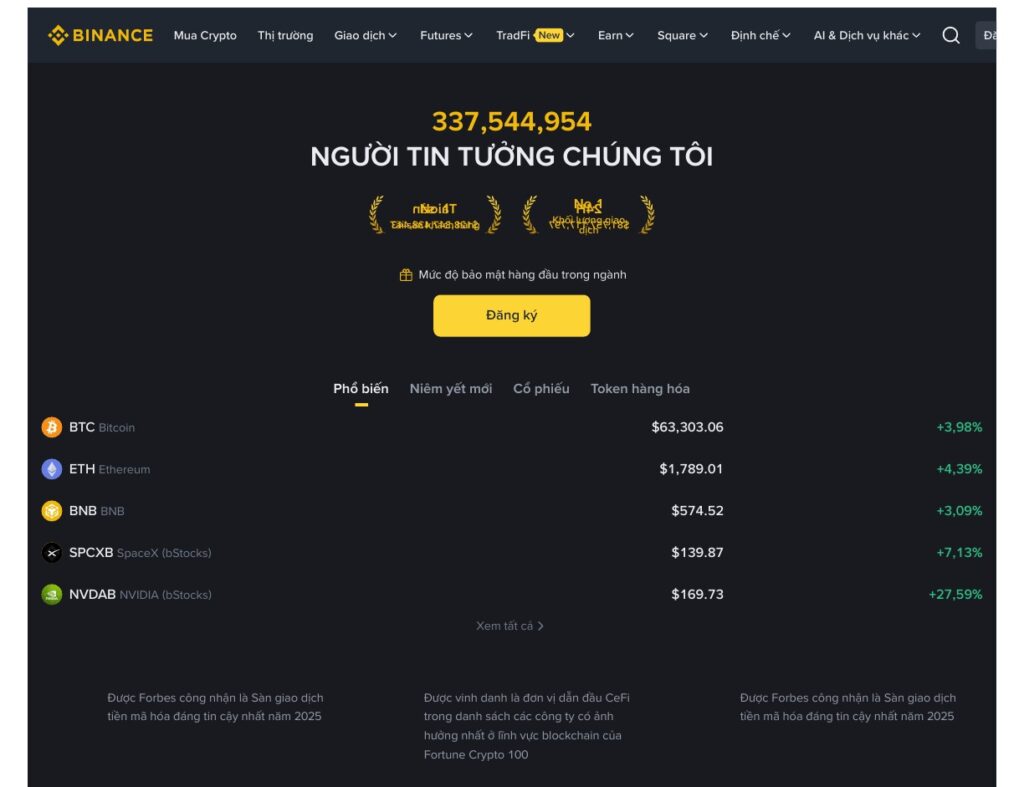
The steps below describe a general transfer workflow. Interfaces and network availability can change, so follow the instructions shown in your own verified accounts rather than relying solely on a screenshot or an older tutorial.
Phase One: Generate the KuCoin deposit address
Step one: Sign in to your verified KuCoin account.
Open KuCoin’s official website or app, complete the required security checks and navigate to the asset deposit section. Make sure you are using the legitimate platform rather than a link sent through an unsolicited message.
Step two: Choose the exact cryptocurrency.
Select the asset you want to receive, such as USDT, BTC or SOL. Do not assume that selecting USDT is enough to determine the network. The same token may be transferable across several networks, and the receiving platform may support only some of them for a particular asset.
Step three: Select the network supported by both exchanges.
This is the critical step. Check the network options displayed by KuCoin and confirm that Binance supports the same network for the asset you are withdrawing. For example, a transfer might use a supported Ethereum-compatible network or Solana, but you must verify the current options for the specific token rather than assume every network is available.
Step four: Copy the deposit address and any required memo or tag.
Use the copy function where possible, then verify the beginning and end of the address. Some assets require an additional memo, destination tag or similar identifier. If KuCoin displays one, copy it exactly and make sure the Binance withdrawal form has a corresponding field. An address alone may not be sufficient for assets that require an additional identifier.
Before proceeding, read KuCoin’s official crypto deposit guidance and the deposit screen’s warnings. Confirm that the asset is enabled for deposits and that the address is valid for the selected network.
Phase Two: Withdraw from Binance
Step five: Open the crypto withdrawal page on Binance.
Sign in to the correct Binance account and navigate to the crypto withdrawal function. Select the same asset you chose on KuCoin.
Step six: Paste the address and match the network exactly.
Paste the KuCoin deposit address into the withdrawal form. Select the network that matches the receiving deposit network exactly, then review any memo or tag requirement. Never choose a network simply because its withdrawal fee is cheaper; a mismatch can result in lost or inaccessible funds.
Step seven: Check the amount and all displayed charges.
Review the withdrawal fee, minimum withdrawal amount and final amount expected to arrive. Also confirm that the amount will meet KuCoin’s minimum deposit requirement, if one applies. The amount leaving Binance may differ from the amount credited to KuCoin because of withdrawal fees or other network-level charges.
Step eight: Complete security verification.
Follow Binance’s current verification process, which may include an authenticator code, email confirmation or other security checks. Review the destination address and network one final time before confirming the withdrawal.
Phase Three: Verify the transfer
Step nine: Track the transaction.
After Binance processes the withdrawal, check the transaction ID or transaction hash where available. You can use the relevant blockchain explorer to monitor confirmation progress, provided you select the correct network.
Step ten: Confirm that KuCoin has credited the deposit.
A transaction can be visible on the blockchain before the exchange credits it to your account. Wait for the required confirmations and check the deposit history. If the transfer is delayed, use the official support channels and provide the transaction details requested.
For a first transfer to a new address, I strongly recommend sending a small test amount when practical. It adds an extra transaction and may incur another fee, but it can reduce the risk of making a larger operational mistake. A test transfer does not eliminate every risk, so still verify the network, address and memo before each withdrawal.
Common transfer mistakes to avoid
- Network mismatch: The sending and receiving networks must match the supported route.
- Missing memo or tag: Some assets require an additional identifier beyond the wallet address.
- Wrong asset: A token with a similar name or ticker may not be the asset you intended to send.
- Minimum deposit overlooked: A small transfer may not meet the receiving platform’s crediting requirements.
- Deposit or withdrawal suspension: A network or token may temporarily be unavailable for maintenance.
- Fake support messages: Never share passwords, two-factor codes or recovery credentials with someone claiming to help you recover a transfer.
If the transaction does not arrive, do not immediately send another large amount to “test” the address. Check the transaction status, network and deposit history first, then contact the exchange through its official support process.
Frequently Asked Questions
Which exchange has lower trading fees?
For many standard spot markets, both exchanges start at 0.10% maker/taker fees at the entry level. An eligible BNB discount can reduce a Binance spot fee to 0.075%, while an eligible KCS discount can reduce a KuCoin Class A spot fee to 0.08%. KuCoin’s Class B and C markets have higher baseline fees, so the token classification matters.
For futures, KuCoin’s published VIP 0 reference rate is 0.02% maker and 0.06% taker. Binance rates depend on the applicable product and tier; if your Binance contract qualifies for a 0.05% taker rate, it is cheaper than KuCoin’s 0.06% baseline by one basis point. Check the current Binance fee schedule and KuCoin VIP schedule before trading.
Which platform is better for altcoin trading and early token listings?
KuCoin may suit traders who want to explore a broad selection of smaller or emerging tokens. Its GemBox feature highlights coins based on recent trading activity and popularity, but it should not be treated as a list of vetted investment opportunities. Binance may be a better fit for traders who prioritize liquidity in major markets and an integrated spot-and-derivatives environment.
Neither exchange guarantees early access to profitable projects. Compare the current listing, token supply, unlock schedule, liquidity and applicable trading fees before buying. Counts such as “900+ cryptocurrencies” or “600+ cryptocurrencies” can become outdated and may count assets differently from trading pairs.
How do KuCoin’s built-in trading bots compare with Binance’s?
KuCoin provides native strategies such as Spot Grid, Futures Grid, DCA, Infinity Grid and Smart Rebalance, subject to availability. Binance also offers a range of native strategies, including Spot Grid, Futures Grid, DCA, rebalancing and arbitrage tools.
KuCoin may appeal if you prefer a bot-focused retail workflow, while Binance offers an extensive bot hub and marketplace. Neither platform’s bots guarantee profit. Compare strategy controls, fees, leverage, monitoring tools and how each bot responds when the market moves beyond its intended range.
Is KuCoin safer than Binance?
There is not enough evidence to declare one universally safer for every user. Binance publishes Proof of Reserves information and operates SAFU, an emergency fund whose official January 2026 composition was reported as 1 billion USDC. KuCoin also publishes Proof of Reserves reports and provides user-verification tools.
These controls improve transparency, but they are not equivalent to a guarantee against loss. Compare the specific legal entity serving you, reserve-report limitations, custody controls, withdrawal processes, regional rules and your own account security. Avoid keeping more on an exchange than you need for your intended trading activity.
Does KuCoin still offer anonymous, no-KYC trading?
New KuCoin users are required to complete identity verification to access its products and services under the exchange’s published rules. Older unverified accounts are also subject to restrictions, including limits on new deposits and trades. Read KuCoin’s current identity-verification guidance and confirm that your documents and jurisdiction are supported before depositing funds.
Can U.S. traders use Binance or KuCoin in 2026?
U.S. residents cannot use Binance.com or KuCoin’s global platform as if they were unrestricted services. KuCoin’s terms list the United States as a restricted location, and the exchange announced restrictions on U.S. accounts and IP access in January 2025. Binance likewise restricts U.S. residents from its global platform.
Binance.US is a separate service with its own eligibility rules, and its availability varies by state. Check the current Binance.US state availability list. Do not use a VPN or misrepresent your residence to bypass geographic restrictions.
Is BNB or KCS better for reducing fees?
BNB offers a discount of up to 25% on eligible Binance spot and margin fees and up to 10% on eligible futures fees, subject to the applicable conditions. KCS provides a 20% spot fee discount in the published entry-level schedule, while KuCoin also lists separate loyalty benefits. These are different mechanisms, and neither should be assumed to apply to every product or bot.
Choose based on your expected eligible trading volume, the token balance you would need to maintain, and your tolerance for token-price volatility. Do not buy a large amount of either token solely to save a small amount in commission without calculating the potential downside.
Does KuCoin’s KCS Bonus guarantee daily passive income?
No. Historical descriptions of the KCS Bonus refer to a revenue-sharing model, but the exact eligibility requirements, minimum holding threshold and reward calculation must be checked against the current program terms. Do not assume that a historical rule—such as a six-KCS minimum or a particular share of daily trading fees—remains unchanged in 2026.
Even if you qualify for a reward program, payouts can vary, program terms can change and the market price of KCS can decline. Treat any potential reward as variable rather than guaranteed income.
Are trading bots free on KuCoin and Binance?
Creating or configuring a native bot may not require a separate third-party subscription, but that does not mean the strategy is cost-free. Executed orders can incur trading fees, and futures strategies can involve funding payments and liquidation risk. Some bot-specific discounts and rates differ from the normal spot schedule.
Check the fee rules for the exact bot and asset you plan to use. Estimate the expected number of orders, include entry and exit costs, and test with a small allocation before committing substantial funds.
Can I move crypto between Binance and KuCoin without paying a fee?
Not necessarily. A withdrawal may incur an exchange withdrawal fee, and the blockchain network may impose costs depending on the route. The receiving exchange may not charge a deposit fee for a particular asset, but you should verify the current terms rather than assume all transfers are free.
Choose a network supported by both exchanges, match the network exactly, and confirm the final amount expected to arrive. The cheapest displayed withdrawal option is not useful if it is incompatible with the receiving deposit address.
Final Verdict
If I were choosing between Binance and KuCoin, I would start with the kind of trading I actually plan to do rather than trying to crown one exchange the winner in every category.
Binance is a strong candidate for traders who prioritize major-market liquidity, competitive eligible futures rates and a broad trading ecosystem. Its BNB discount can reduce eligible spot fees, and its native bot suite means automation is not a reason to rule it out.
KuCoin is worth considering for traders who value native bot strategies and want to research a wider range of smaller tokens. Its Class A, B and C fee structure makes it especially important to check the exact market before placing an order, while KCS-related discounts and rewards should be evaluated under the current terms rather than older promotional descriptions.
My practical recommendation is to compare the two exchanges using the same asset, order size and trading strategy. Check the order-book depth and spread, calculate the actual fees after eligible discounts, inspect the bot settings if you intend to automate, and verify that the platform is permitted in your jurisdiction. Then consider the security and withdrawal arrangements before deciding how much capital to keep there.
The most important correction to remember is that a bigger altcoin catalogue, a lower advertised fee or a reserve ratio above 100% does not, by itself, make an exchange the best choice. The right platform is the one whose current products, costs, legal availability and risk controls fit your needs—and whose risks you understand before committing your money.