Lido at a Glance
Lido has become one of the most recognizable names in Ethereum liquid staking because it addresses a practical problem: staking ETH directly can be rewarding, but it also requires capital, validator infrastructure, technical knowledge, and ongoing operational attention.
With Lido, you can deposit ETH into a pooled staking protocol and receive stETH, a liquid representation of your staked position. Instead of running a validator yourself, the protocol allocates stake across its participating node operators. Your stETH remains a transferable token, which means you can hold it, use it in supported DeFi applications, or wrap it into wstETH when a non-rebasing asset is more convenient.
The distinction between Lido and Lido DAO is important. Lido is the protocol and its associated infrastructure. Lido DAO is the decentralized governance organization responsible for important decisions about how that protocol operates. LDO is the governance token that gives holders voting power within this organization.
| Metric | Specification |
|---|---|
| Protocol | Lido |
| Governance organization | Lido DAO |
| Governance token | LDO |
| Main staking asset | ETH |
| Liquid staking token | stETH |
| Wrapped liquid staking token | wstETH |
| Primary blockchain | Ethereum |
| Validator model | Pooled staking through staking modules and node operators |
| Community participation | Community Staking Module (CSM) |
| Decentralization technology | Distributed Validator Technology (DVT), including integrations using Obol and SSV |
| Protocol fee | Currently 10% of staking rewards, subject to DAO governance and module-specific distribution |
| Initial LDO supply | 1 billion tokens minted at launch |
Lido’s architecture has evolved beyond its original curated validator model. Its current Ethereum staking infrastructure includes the Curated Module and permissionless Community Staking Module pathways. The exact module configuration and operator requirements can change, so it is worth checking the official staking module documentation rather than relying on older descriptions of the protocol.
One detail deserves particular attention: the 1 billion LDO figure refers to the initial token supply minted at launch. It should not be confused with the supply of stETH, which changes through staking deposits, withdrawals, rewards, and penalties. The two tokens serve completely different functions.
What is Lido DAO (LDO)?
Lido DAO is the decentralized governance organization responsible for managing the Lido liquid staking protocol. It allows LDO holders to participate in decisions concerning protocol parameters, node operator management, treasury spending, security initiatives, and upgrades.
The protocol itself is designed to make Ethereum staking more accessible. Traditionally, running an Ethereum validator requires a deposit of 32 ETH, suitable hardware or hosting infrastructure, and the ability to maintain a validator reliably. A participant also needs to understand validator keys, client software, network uptime, and the consequences of operational mistakes.
That setup works well for experienced operators, but it creates a substantial barrier for ordinary ETH holders.
Lido takes a pooled approach. You deposit ETH into its staking contract, and the protocol coordinates validator activity through its staking infrastructure. In return, you receive stETH, which represents your share of the pooled staked ETH.
The key advantage is that you do not need to manage validator hardware yourself. You can also stake an amount below the 32 ETH requirement for an individual Ethereum validator. Your deposit becomes part of a larger staking operation managed by participating node operators.
However, liquid staking does not mean that your ETH is magically free of staking-related constraints. The underlying ETH is committed to Ethereum validation, and withdrawing it depends on the protocol’s withdrawal process and the state of the Ethereum network. You receive a liquid token that can be transferred or used in DeFi, but its market price can differ from ETH.
This distinction is central to understanding Lido. It separates the economic exposure of staking ETH from the operational work required to run validators.
Why Lido DAO Exists
Ethereum’s proof-of-stake system depends on validators to propose and attest to blocks. Validators help secure the network and receive rewards for performing their duties correctly. They can also face penalties when they fail to meet network requirements or behave in ways that violate consensus rules.
Solo staking gives participants direct control over their validator infrastructure, but it is not the only way to participate in staking.
A pooled staking protocol can coordinate deposits from many users and distribute the resulting economic exposure across a broader validator operation. This makes staking more accessible, although it introduces a different set of dependencies: smart contracts, node operator performance, oracle reporting, governance, and the market behavior of the liquid staking token.
Lido DAO exists to coordinate these moving parts through a governance structure rather than placing every decision under the control of a single company or exchange.
According to Lido’s governance documentation, LDO holders participate in decisions involving protocol parameters, fees, node operators, oracles, and the allocation of DAO resources. The DAO also manages service-fee revenue to support research, development, liquidity incentives, and protocol upgrades.
That does not mean every decision is made through a simple token-holder poll. Lido uses on-chain governance infrastructure and specialized operational roles. Some routine activities can follow delegated or streamlined processes, while more significant decisions require broader governance procedures.
Lido Is Not the Same as LDO
It is easy to confuse the protocol, its governance organization, and its token because they share the same brand. In practice, their roles are different.
| Name | Main role | What it represents |
|---|---|---|
| Lido | Liquid staking protocol | Infrastructure for staking ETH and issuing stETH |
| Lido DAO | Governance organization | Decision-making and oversight |
| LDO | Governance token | Voting power in Lido DAO |
| stETH | Liquid staking token | A user’s share of staked ETH and associated rewards or penalties |
| wstETH | Wrapped staking token | A non-rebasing representation of stETH |
If you hold LDO, you have exposure to the governance token and its market dynamics. You do not automatically receive Ethereum staking rewards simply because you own LDO.
If you stake ETH through Lido and receive stETH, you hold the liquid staking asset that reflects your participation in the protocol.
Keeping these roles separate will make the rest of the architecture much easier to understand.
How Does Lido Liquid Staking Work?

The core idea behind Lido is straightforward: users deposit ETH, the protocol coordinates staking through validators, and users receive a liquid token representing their position.
The actual system is more involved than a basic deposit-and-receipt process, though. It relies on smart contracts, a staking router, node operators, oracle reports, and withdrawal infrastructure.
Overcoming the 32 ETH Validator Requirement
Ethereum‘s standard validator deposit is 32 ETH. Someone who wants to run a conventional validator must also prepare the technical infrastructure needed to keep it online and operating correctly.
For a user with 2 ETH, 5 ETH, or 10 ETH, operating a standard validator independently is not an option under the ordinary 32 ETH model.
Lido changes the user-facing requirement by pooling deposits. You can submit an amount of ETH to the protocol without personally supplying the full 32 ETH required for a standalone validator.
The protocol aggregates deposits and allocates stake to its validator infrastructure. Node operators run the validators, while the protocol accounts for the pooled ETH and distributes the resulting rewards and penalties through its token mechanics.
A simplified sequence looks like this:
- You connect a compatible wallet to Lido’s official staking interface.
- You deposit ETH into the protocol.
- The protocol issues stETH representing your share of the pooled position.
- Node operators perform validator duties using the allocated ETH.
- Oracle reports update the protocol’s accounting.
- Your stETH balance changes through rebasing as rewards or penalties are reflected.
This design removes the need for each user to operate a validator. It does not remove Ethereum’s validator requirements; it changes how deposits are aggregated and how validator operations are coordinated.
You should also distinguish between staking as a depositor and operating as a node operator. A person depositing ETH through Lido does not need to manage validator keys or maintain a server. Someone who wants to become a Lido node operator still needs the appropriate infrastructure, operational knowledge, and module-specific collateral.
The Role of Node Operators
Node operators are the entities or individuals responsible for running validators on behalf of the protocol.
Their work includes maintaining execution and consensus clients, protecting validator keys, monitoring uptime, processing protocol instructions, and ensuring that validators follow Ethereum’s consensus rules.
Poor validator performance can reduce rewards. More serious operational failures can result in penalties or slashing.
Lido’s operator architecture is designed to distribute these responsibilities across multiple participants rather than relying on one validator operator. However, the degree of decentralization depends on the actual distribution of stake, infrastructure, clients, and operator independence—not simply the number of names displayed on a list.
Lido’s current Ethereum architecture uses multiple staking modules, including a curated pathway and permissionless community staking pathways.
Curated Module v2
The Curated Module v2, or CMv2, serves a curated set of node operators.
An eligible operator enters through the relevant onboarding process. The Curated Module Committee can then assign the operator to a group and determine its allocation weight. This approach allows the protocol to apply operator eligibility criteria and manage how stake is distributed.
The model has an obvious trade-off.
A curated operator set can provide structured oversight and allow the DAO to work with operators that meet defined standards. At the same time, curated admission introduces gatekeeping and governance dependencies. If too much stake is concentrated among a limited number of operators, the network may remain exposed to centralization concerns.
That is one reason Lido’s permissionless community staking pathways matter.
Community Staking Module: Opening the Door to Independent Operators
The Community Staking Module, commonly called CSM, gives independent operators a permissionless route into Lido’s Ethereum node operator set.
Rather than requiring every participant to be selected through the traditional curated process, CSM allows eligible operators to join by meeting the module’s technical and bonding requirements.
The module is designed to make participation more accessible to solo stakers, small groups, and community operators. Operators provide an ETH-based bond as security collateral. That bond is not simply another name for the validator’s full stake; it is collateral that can be used to cover certain losses or penalties associated with operator performance.
The current architecture includes separate permissionless modules for different validator withdrawal credential types. The official Lido staking module overview describes the Curated Module v2 and the 0x01 and 0x02 CSM pathways as live on mainnet.
This matters because older explanations sometimes describe CSM as a future decentralization initiative or a limited pilot. That description is no longer sufficient. CSM is part of Lido’s live Ethereum staking architecture.
Permissionless does not mean that anyone can run a validator without meeting any conditions. Operators still need suitable infrastructure, validator keys, the required bond, and compliance with module rules. The protocol can also apply penalties or remove validators when operators fail to meet their obligations.
For a deeper look at the operational model, the CSM overview explains its entry requirements, bond mechanics, validator expectations, and relationship with DVT.
Understanding stETH: Lido’s Auto-Rebasing Liquid Staking Token
stETH is the liquid staking token issued by Lido when users deposit ETH. It represents a share of the ETH pooled through the protocol, including the economic effects of staking rewards and penalties.
Its most recognizable feature is rebasing.
Unlike a conventional token whose balance remains fixed unless you transfer or receive more tokens, stETH updates its displayed balance as the protocol reports changes in the pooled staking position.
How the stETH Rebase Works
Lido uses an oracle reporting process to update protocol accounting. The Accounting Oracle gathers information about validator balances and other relevant protocol data, then submits reports that allow the protocol to account for rewards, penalties, and withdrawals.
Under normal conditions, the process results in a positive rebase as staking rewards accrue. If the validator set experiences penalties or slashing, the balance can also be affected negatively.
According to Lido’s rewards and penalties documentation, stETH balances are updated through a daily rebase, generally around 12:30 UTC, although the precise timing can vary.
Imagine that you hold 10 stETH. If the underlying staking position earns rewards, your displayed balance may gradually increase. You do not need to claim each reward manually or receive a separate reward token for every reporting period.
The rebase is an accounting mechanism. It reflects changes in your share of the pooled position; it does not mean that the protocol is sending new ETH directly to your wallet every day.
There is another important point: stETH can reflect penalties as well as rewards. A positive balance adjustment is not guaranteed under every market or validator condition.
Why stETH Is Liquid
Traditional staking can make capital less convenient to use. Your ETH is committed to validator operations, and accessing it depends on the network’s withdrawal process.
Lido introduces a liquid token that can move independently of the original deposit transaction. You can transfer stETH, hold it in a compatible wallet, or use it in supported decentralized finance applications.
This creates a second layer of utility.
Instead of choosing between staking ETH and using ETH-related assets in DeFi, you can potentially do both through a liquid staking token. For example, supported applications may allow stETH to be used as collateral or supplied to liquidity pools.
However, liquidity is not the same as guaranteed redemption at the exact market price of ETH.
stETH is designed to represent a claim on the pooled staking position, but its secondary-market price can trade above or below ETH depending on liquidity, market demand, redemption conditions, and broader market sentiment.
During periods of market stress, a holder who needs immediate liquidity may choose to sell stETH at a discount rather than wait for the protocol’s withdrawal process. That is why understanding the difference between token accounting value and market price matters.
What Is wstETH? Understanding the Difference Between stETH and wstETH
wstETH is the wrapped, non-rebasing version of stETH.
It was developed to make Lido’s staking exposure easier to integrate with DeFi applications that expect token balances to remain constant. While stETH balances change through rebasing, wstETH balances do not.
Instead, the value of each wstETH unit in stETH terms changes over time.
This is the most important distinction when comparing the two tokens.
How wstETH Works
When you wrap stETH, the wrapping contract converts your rebasing token into a representation based on shares.
The number of wstETH tokens in your wallet remains fixed unless you transfer, wrap, or unwrap tokens. Meanwhile, the amount of stETH represented by each wstETH can increase as staking rewards accrue.
For example, suppose you wrap 10 stETH and receive a smaller number of wstETH based on the current conversion rate. Your wstETH balance stays the same as time passes, but each unit can represent more stETH as the underlying position accrues rewards.
When you unwrap, the contract returns the corresponding amount of stETH.
The official wstETH contract documentation describes wstETH as an ERC-20 value-accruing wrapper. Its balance does not change with each oracle report, while its value in stETH terms does.
stETH vs. wstETH: A Practical Comparison
| Feature | stETH | wstETH |
|---|---|---|
| Token type | Rebasing liquid staking token | Wrapped, non-rebasing token |
| Wallet balance | Changes as rebases are applied | Remains constant unless transferred or converted |
| Reward reflection | Through balance changes | Through an increasing stETH conversion value |
| Accounting model | Shares-based rebasing token | Wrapped representation of stETH shares |
| DeFi compatibility | Supported by applications designed for rebasing tokens | Often easier to integrate with standard ERC-20 systems |
| Typical use | Holding liquid staking exposure and compatible DeFi strategies | DeFi collateral, bridges, and integrations requiring stable token balances |
Neither token is inherently a higher-yield version of the other. They represent the same underlying Lido staking exposure through different accounting formats.
If you prefer seeing staking rewards reflected directly in your wallet balance, stETH may feel more intuitive. If you use applications that expect a fixed token balance, wstETH may be more practical.
Why DeFi Applications Often Prefer wstETH
Many DeFi contracts are designed around standard ERC-20 accounting. They expect a token balance to change only when a transfer, mint, or burn occurs.
A rebasing token introduces additional accounting complexity. If a protocol does not correctly account for balance changes, it may miscalculate collateral, liquidity positions, or user balances.
wstETH helps solve this integration problem by keeping the wallet balance stable while allowing the underlying value to accrue.
That is particularly useful when assets move across bridges or are used as collateral in lending protocols.
wstETH has been integrated into a range of DeFi environments, including applications associated with lending, liquidity, and collateral management. However, you should never assume that every version of Aave, MakerDAO/Sky, or a Layer-2 application supports every wstETH deployment. Always verify the exact asset contract, network, and market.
The fact that a protocol supports wstETH on Ethereum does not automatically mean it supports a bridged representation on another chain.
Security, Decentralization, and Distributed Validator Technology
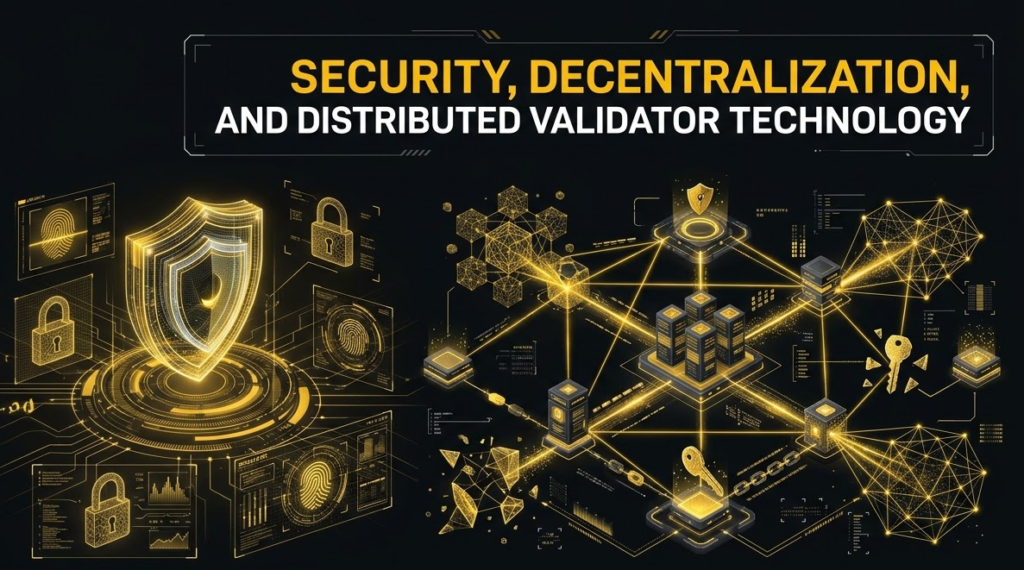
Liquid staking protocols need more than smart contracts that accept deposits. They also need a reliable validator operation, accurate accounting, secure key management, and a process for handling failures.
Lido addresses these areas through several layers: operator distribution, staking modules, oracle infrastructure, security reviews, and integrations with Distributed Validator Technology.
None of these mechanisms makes staking risk-free. Their purpose is to reduce specific failure modes and improve the system’s ability to continue operating when individual components fail.
Understanding Slashing and Validator Risks
Ethereum validators can face penalties for failing to perform their duties correctly. More serious violations can result in slashing, which reduces the validator’s stake.
A liquid staking user does not directly operate the validator, but the user’s economic position is still exposed to the performance of the validators managing the pooled ETH.
This creates an important distinction between operational convenience and risk elimination.
Lido removes the need for each depositor to run validator hardware, but it does not remove the underlying Ethereum staking risks. If validators perform poorly or are slashed, the pooled position can be affected.
Other risks can arise from:
- Smart contract vulnerabilities.
- Oracle errors or reporting failures.
- Concentration among node operators.
- Validator client bugs.
- Infrastructure outages.
- Governance decisions or compromised operational permissions.
- Liquidity shortages or market discounts in stETH.
- Risks inherited from DeFi applications that accept stETH or wstETH as collateral.
Lido’s staking modules also use operator bonds. These bonds provide collateral against certain operator-related losses and can be subject to penalties under the module’s rules. They should not be mistaken for a universal insurance policy that guarantees every stETH holder will be made whole after any incident.
What Is Distributed Validator Technology?
Distributed Validator Technology, or DVT, is an approach that allows multiple independent operators to participate in running a validator without giving any one participant sole control of the complete validator signing key.
In a conventional validator setup, one operator controls the validator’s signing infrastructure. If that operator experiences a serious outage or security incident, the validator may stop performing correctly.
DVT changes the operational structure.
A validator key can be generated through a distributed key-generation process and represented by encrypted shares distributed across multiple operators. These participants cooperate to produce validator signatures according to the protocol’s threshold requirements.
The intended benefits include:
- Improved fault tolerance: A validator may continue operating even if one participant becomes unavailable, depending on the cluster configuration.
- Reduced single-operator dependency: No single participant needs to control the complete validator key.
- Stronger operational distribution: Validator responsibilities can be shared across independent machines and operators.
- Additional security layers: An attacker may need to compromise multiple participants rather than one machine.
Lido’s Ethereum scorecard describes the use of Obol- and SSV-based DVT in its Simple DVT Module. It also explains that distributed key generation is used so that no single node operator or other party controls the complete private key during its lifetime.
Obol and SSV Network
Obol and SSV Network are two infrastructure projects associated with DVT implementations.
Both aim to distribute validator responsibilities across independent operators, although their software, cluster configuration, and operational details differ.
For operators using CSM, Lido provides documentation for DVT setups, including an SSV-based CSM guide.
The guide explains how SSV splits validator keys into encrypted shares and distributes them among independent operators. It also discusses cluster formation and the operational considerations involved in coordinating participants.
DVT is not a guarantee that a validator can never be slashed. Incorrect configuration, correlated software failures, poor operator coordination, or other problems can still cause losses. DVT reduces certain single-point-of-failure risks, but it does not remove every technical or economic dependency.
Is Lido Decentralized?
This question deserves a more thoughtful answer than a simple yes or no.
Lido is governed by a DAO, uses multiple node operators, and has expanded its validator onboarding model through permissionless CSM pathways. It also supports DVT integrations that can distribute validator responsibilities across independent participants.
These are meaningful decentralization mechanisms.
At the same time, decentralization is not a binary property. A protocol can have permissionless entry while still having stake concentrated among a relatively small number of operators. Governance can also remain influenced by large token holders, and oracle or emergency-management processes can introduce their own dependencies.
A useful way to assess Lido is to examine several dimensions separately:
| Dimension | What to examine |
|---|---|
| Validator distribution | How much stake is controlled by each operator or operator group? |
| Entry permissions | Can independent operators join without discretionary approval? |
| DVT adoption | How widely are validators distributed across independent participants? |
| Client diversity | Are validators relying on a narrow set of execution or consensus clients? |
| Governance | Who holds voting power, and how are important decisions approved? |
| Emergency controls | Who can pause, upgrade, or intervene in protocol contracts? |
| Oracle resilience | How are reports produced, verified, and submitted? |
Lido’s security and decentralization scorecard is a useful starting point because it evaluates multiple aspects of the protocol rather than reducing decentralization to one headline metric.
LDO Tokenomics: Supply, Distribution, and Governance
LDO is the native governance token of Lido DAO. It gives holders voting power over decisions that shape the protocol’s development and operations.
It is not the liquid staking token, and holding it does not automatically generate ETH staking rewards.
Does LDO Have a 1 Billion Maximum Supply?
Lido’s original token launch minted 1 billion LDO tokens. The project announced this supply and its initial allocation in its January 2021 LDO token introduction.
The original distribution was:
| Allocation category | Initial allocation |
|---|---|
| DAO Treasury | 36.32% |
| Investors | 22.18% |
| Validators and signature holders | 6.50% |
| Initial Lido developers | 20.00% |
| Founders and future employees | 15.00% |
| Total | 100% |
These figures describe the initial allocation, not a live snapshot of circulating supply. Tokens may have been transferred, vested, distributed, or used through governance decisions since launch.
The initial announcement also stated that founding members’ allocations were subject to a lock-up and vesting schedule, while treasury tokens could be allocated through DAO proposals.
It is therefore useful to separate three concepts:
- Initial supply: The 1 billion tokens minted at launch.
- Circulating supply: The amount currently available in the market, which can change over time.
- Treasury holdings: Tokens controlled by DAO-related treasury structures and potentially used through governance-approved initiatives.
The 1 billion figure is the established initial token supply and commonly cited maximum supply. However, token supply claims should always be checked against the deployed token contract and current official disclosures. Do not assume that every token in the original allocation is circulating or that the initial distribution table describes today’s ownership.
What Does LDO Actually Do?
LDO’s central utility is governance.
LDO holders can participate in decisions concerning the protocol’s direction, parameters, and resource allocation. Voting power is generally proportional to the amount of LDO used in the relevant governance process, subject to the rules of the governance contracts.
Examples of decisions that may involve Lido DAO governance include:
- Protocol fee parameters.
- Node operator and staking module policies.
- Oracle and infrastructure arrangements.
- Protocol upgrades and security initiatives.
- Treasury spending and grants.
- Liquidity incentives and ecosystem development.
The official Lido DAO documentation explains that the DAO manages key parameters such as fees and the assignment of node operators and oracles. It also describes the treasury’s role in funding research, development, incentives, and protocol upgrades.
Governance is not simply a popularity contest. Proposals can involve technical changes, financial commitments, security trade-offs, and operational responsibilities. A voter who wants to participate meaningfully should read the proposal details rather than relying only on a short title or social media summary.
How Lido Protocol Fees Work
Lido charges a protocol fee on staking rewards. The current published protocol fee is 10% of rewards, rather than 10% of the user’s deposited ETH.
That distinction matters.
If you deposit 10 ETH, the protocol does not simply deduct 1 ETH as a fee. Instead, the fee is applied to the rewards generated by the pooled staking position.
The fee supports node operators and DAO-related operations. The precise distribution can vary by staking module, reflecting differences in how operator incentives and treasury allocations are structured.
Lido’s protocol fee page describes the current 10% fee and the module-specific distribution arrangements. It also explains that the fee is incorporated into the reward accounting process and can be changed through DAO governance.
For example, the published fee structure distinguishes between the Curated Module, Simple DVT, and different CSM configurations. That is why it would be misleading to assume that every node operator receives exactly the same share of rewards under every module.
The fee mechanism is also different from LDO token ownership. LDO holders participate in governance over protocol decisions, while the protocol fee is associated with staking rewards earned through the Lido system.
Does LDO Automatically Earn Staking Yield?
No.
This is one of the most common misunderstandings surrounding the Lido ecosystem.
LDO is a governance token. It does not represent a deposit of ETH into Ethereum validators, and simply holding it does not cause your wallet balance to increase through stETH rebasing.
stETH and wstETH represent liquid staking exposure. LDO represents governance participation.
You should evaluate them as separate assets with different sources of risk and potential value.
Common Pitfalls and Misconceptions About Lido DAO
Lido’s design is relatively easy to describe at a high level, but a few misunderstandings can lead users to make poor decisions. These are worth clearing up before you stake ETH or use stETH in DeFi.
Misconception: Holding LDO Generates Ethereum Staking Rewards
It does not.
LDO is used for governance, while stETH reflects a user’s participation in the pooled ETH staking position. The staking rewards associated with Lido are reflected through stETH’s rebasing mechanics or through the changing stETH value of wstETH.
If you buy LDO, you are buying a governance token. You are not automatically staking ETH.
Misconception: stETH and wstETH Are Different Yield Products
They are different token formats representing the same underlying Lido staking exposure.
stETH is rebasing, so the displayed balance changes as rewards and penalties are reported. wstETH is non-rebasing, so the displayed balance remains constant while its conversion value in stETH changes.
The difference is primarily about accounting and compatibility, not a separate source of staking rewards.
Misconception: Every DeFi Protocol Supports stETH
Not every DeFi application handles rebasing tokens correctly.
Some applications are designed to work with stETH directly, while others prefer wstETH because it behaves like a conventional non-rebasing ERC-20 token.
Before supplying either asset to a lending market, liquidity pool, or collateral vault, check the exact token contract and integration documentation. A protocol supporting wstETH does not necessarily support stETH, and support on one network does not guarantee support on another.
Misconception: Liquid Staking Means Instant ETH Redemption
Liquid staking means that you receive a transferable token representing your staking position. It does not guarantee that you can exchange that token for ETH at exactly 1:1 at any moment.
You may be able to sell stETH or wstETH on a secondary market, but the price depends on market liquidity and demand.
Alternatively, you can use Lido’s withdrawal process, which involves submitting a request and waiting for it to be fulfilled. The time required depends on protocol and Ethereum network conditions.
This is why a liquid staking token can be useful without being identical to ETH in every market situation.
Misconception: DVT Eliminates Slashing Risk
DVT can reduce the risks associated with relying on a single validator operator or machine. It does not make validator operations immune to mistakes, software bugs, correlated failures, or malicious behavior.
A distributed validator cluster still needs correct configuration and reliable coordination. If enough participants fail or the cluster behaves incorrectly, the validator can still experience penalties.
Think of DVT as a resilience improvement, not a guarantee.
Misconception: Permissionless CSM Means There Are No Operator Requirements
CSM makes entry permissionless, but operators must still meet technical and economic requirements.
They need to run validator infrastructure, manage keys securely, provide the required bond, and follow module policies. The protocol can apply penalties or initiate validator exits when operators fail to meet their obligations.
Permissionless participation is an improvement in access, not the removal of operational responsibility.
How to Stake ETH Through Lido and Wrap stETH into wstETH
If you understand the difference between the protocol, staking tokens, and governance token, the user journey becomes much easier to follow.
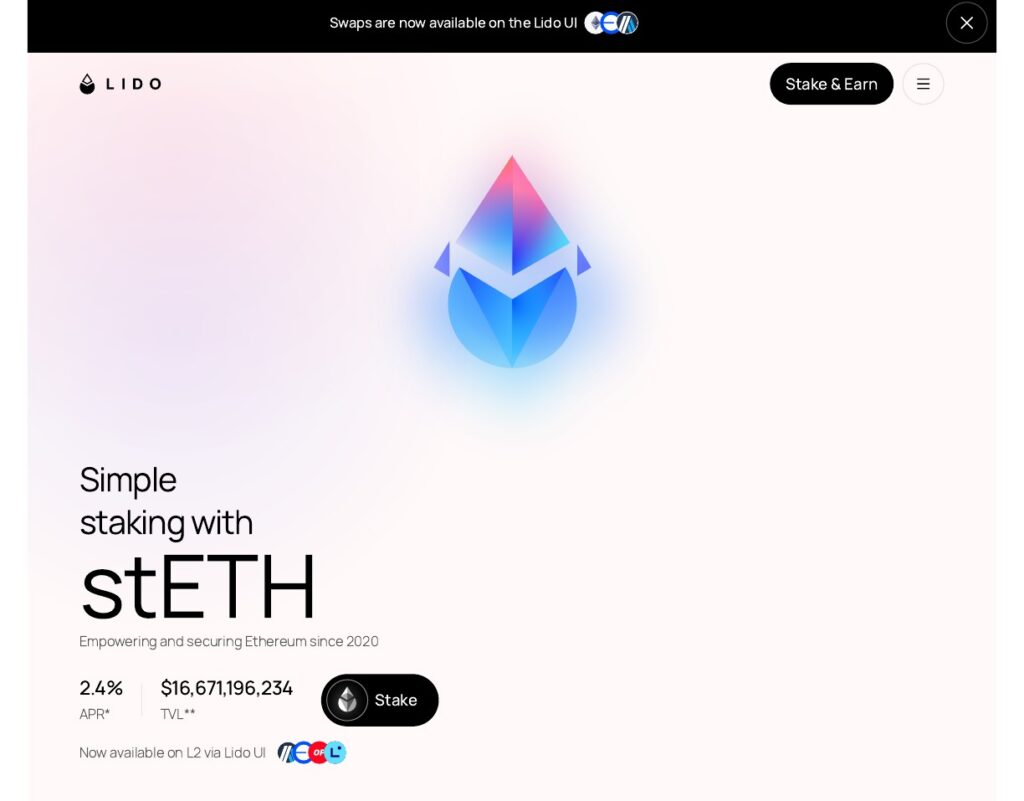
The following steps describe the general process. Interfaces and contract details can change, so always verify the current official application and network before approving a transaction.
Phase One: Stake ETH and Receive stETH
Step 1: Prepare a compatible wallet
Use an Ethereum-compatible wallet that supports the Ethereum mainnet and can display ERC-20 tokens. Examples include MetaMask and Rabby.
Make sure your wallet is connected to the correct network and has enough ETH to cover both the staking deposit and transaction fees.
Step 2: Open the official Lido interface
Visit the official Lido staking application at stake.lido.fi.
Check the domain carefully. Avoid links from unsolicited messages, search advertisements, or unfamiliar social media accounts. A fake staking page can imitate the appearance of the real application and request wallet approvals that put your assets at risk.
Step 3: Choose the amount of ETH
Enter the amount you want to stake. Unlike operating a conventional Ethereum validator, you do not need to deposit 32 ETH through the user-facing Lido staking flow.
Before confirming, review the amount of stETH expected in return and the transaction details shown by the interface.
Step 4: Confirm the transaction
Your wallet will display a transaction request. Review the network, destination, and transaction details before signing.
Once the transaction is confirmed, the protocol issues stETH to your wallet according to its accounting rules.
Step 5: Monitor your stETH position
Your stETH balance should update as the protocol processes oracle reports. The rebase reflects the economic results of the pooled staking position, including rewards and possible penalties.
You do not need to manually claim every daily rebase.
Phase Two: Wrap stETH into wstETH
Wrapping is optional. You do not need to convert stETH into wstETH simply to earn the underlying staking rewards.
However, wstETH can be more convenient when interacting with applications that require non-rebasing token balances.
Step 1: Open the official wrapping interface
Use Lido’s official wrapping page at stake.lido.fi/wrap.
Step 2: Connect your wallet
Connect the wallet that holds your stETH. Confirm that you are on the intended network and interacting with the correct application.
Step 3: Enter the amount to wrap
Choose how much stETH you want to convert. The interface will display the expected wstETH amount based on the current conversion rate.
Do not expect the number of wstETH received to match the number of stETH deposited. The two tokens use different accounting formats.
Step 4: Approve and confirm
If the contract requires token approval, review the requested allowance before signing. Then confirm the wrapping transaction.
After it completes, your wallet should show wstETH instead of the wrapped amount of stETH.
Step 5: Check the token representation
Your wstETH balance will not automatically increase as staking rewards accrue. Instead, each wstETH unit will represent a changing amount of stETH.
When you unwrap, you receive the corresponding amount of stETH based on the conversion rate at that time.
How to Participate in Lido DAO Governance

If you hold LDO, you can participate in governance decisions that influence the protocol’s development and operations.
The process involves more than purchasing the token. Effective participation requires understanding proposals and considering their technical, economic, and security implications.
Acquire LDO
LDO is available through supported crypto exchanges and decentralized trading venues. If you acquire it through a decentralized exchange, verify the official Ethereum token contract rather than relying on a token name or ticker alone.
The official Lido documentation identifies the Ethereum LDO contract address as:
0x5a98fcbea516cf06857215779fd812ca3bef1b32
You can cross-check this address against the official Lido DAO documentation.
Review Governance Proposals
Before voting, read the proposal’s background, requested changes, implementation details, and potential risks.
A proposal may affect fees, operator policies, treasury spending, protocol upgrades, or other important parameters. Some changes may look simple at the headline level but have significant consequences for validator operations or the economics of stETH.
The Lido research forum is a useful place to follow discussions and understand the reasoning behind proposals.
Vote Through the Governance Interface
Lido uses on-chain governance infrastructure, including Aragon Voting. Voting power is associated with LDO holdings and the rules of the governance system.
The official Lido voting guide explains how participants can review votes, cast votes, override delegated votes, and delegate voting power using Etherscan.
Do not assume that every governance discussion on a forum or Snapshot poll is itself the final on-chain execution. Check the proposal’s status and the relevant governance process to understand whether a vote is advisory, binding, or part of a broader execution sequence.
Is Lido Safe for Staking ETH?
There is no honest way to describe any liquid staking protocol as completely safe.
Lido has several security layers, including smart contract reviews, distributed validator infrastructure, node operator requirements, oracle mechanisms, and governance oversight. These measures reduce certain risks, but they cannot eliminate every possible failure.
Smart Contract Risk
Lido relies on smart contracts to accept deposits, issue stETH, manage protocol accounting, coordinate staking modules, and process withdrawals.
A vulnerability in a critical contract could affect user funds or protocol operations.
Lido publishes a collection of security reviews and audit reports. Its audit documentation lists assessments across core protocol components, staking modules, oracle infrastructure, and other systems.
Audits are useful evidence of security work, but they are not guarantees. A review only covers a particular codebase and scope at a particular point in time. New changes can introduce new risks, and an audited system can still contain undiscovered vulnerabilities.
Validator and Slashing Risk
Lido’s node operators run the validators that secure Ethereum and generate staking rewards. Their operational performance directly affects the pooled staking position.
Operator bonds, module policies, and DVT integrations help manage this risk. However, penalties and slashing remain possible.
Liquidity and Depeg Risk
stETH is designed to represent staked ETH, but its secondary-market price is determined by supply and demand.
If many holders want to sell at once, the market price can fall below ETH. A user who needs immediate liquidity may have to accept a discount.
wstETH has a similar underlying exposure because it represents stETH in a wrapped format. Wrapping does not remove the possibility of a market discount.
Governance Risk
Lido DAO governs important protocol parameters and operational permissions. Governance decisions can influence fees, validator participation, upgrades, and treasury allocation.
Token-based governance can also create concentration concerns. Large holders may have greater voting influence, and voters may disagree about the best balance between decentralization, efficiency, and security.
DeFi Integration Risk
If you use stETH or wstETH as collateral, provide liquidity, or deposit it into a third-party vault, you add another layer of smart contract and market risk.
The third-party application may have vulnerabilities or liquidation rules that are separate from Lido itself. A problem in a lending protocol can affect your position even if Lido’s core staking contracts continue operating normally.
For this reason, staking through Lido and deploying the resulting token into another DeFi strategy should be treated as two separate risk decisions.
Frequently Asked Questions About Lido DAO (LDO)
What is Lido DAO (LDO) and how does it work?
Lido DAO is the decentralized governance organization behind Lido, an Ethereum liquid staking protocol. Users deposit ETH into Lido and receive stETH, which represents their share of the pooled staking position. LDO is the governance token used to participate in decisions about the protocol’s development, fees, operators, and treasury.
What is the difference between stETH and wstETH?
stETH is a rebasing liquid staking token. Its displayed wallet balance changes as staking rewards or penalties are reflected through protocol reports.
wstETH is a wrapped, non-rebasing version. Its token balance remains constant, while the amount of stETH represented by each wstETH can change over time.
Both represent the same underlying Lido staking exposure, but they use different accounting formats.
Does LDO have a maximum supply of 1 billion tokens?
Lido minted 1 billion LDO tokens at launch in January 2021, and 1 billion is the commonly cited maximum supply. The original allocation included the DAO treasury, investors, validators and signature holders, initial developers, and founders and future employees.
The original allocation should not be confused with current circulating supply. For the historical distribution, see Lido’s original LDO announcement.
Does holding LDO earn ETH staking rewards?
No. LDO is a governance token, not a liquid staking token.
ETH staking rewards through Lido are reflected in stETH or in the changing stETH value of wstETH. Holding LDO does not automatically make your wallet earn Ethereum staking rewards.
Can I stake less than 32 ETH through Lido?
Yes. Lido’s user-facing pooled staking flow allows users to deposit amounts below the 32 ETH required to operate a conventional standalone Ethereum validator.
The protocol aggregates deposits and coordinates validator operations through its staking infrastructure. This is different from becoming a node operator, which has separate technical and bonding requirements.
What is the Community Staking Module?
The Community Staking Module, or CSM, is a permissionless pathway that allows independent operators to participate in Lido’s Ethereum validator set.
Operators must still meet technical requirements, provide the required bond, and follow the module’s rules. CSM is designed to broaden participation beyond the traditional curated operator model.
What is Distributed Validator Technology?
Distributed Validator Technology allows multiple independent operators to participate in operating a validator through distributed key shares and coordinated signing.
It reduces reliance on a single operator or machine, potentially improving resilience and decentralization. However, it does not eliminate all slashing, software, or coordination risks.
Is Lido safe for staking ETH?
Lido has extensive security documentation, audits, operator requirements, and infrastructure designed to manage staking risks. However, no liquid staking protocol is risk-free.
Users remain exposed to smart contract vulnerabilities, validator penalties, oracle problems, governance decisions, liquidity discounts, and risks from any third-party DeFi application in which they use stETH or wstETH.
Can I redeem stETH for ETH?
Lido provides a withdrawal process through which eligible stETH holders can request ETH. The process is not necessarily instant and can depend on the protocol’s withdrawal queue and Ethereum network conditions.
You may also sell stETH on a supported secondary market, but the market price may be above or below ETH. Selling and protocol redemption are different ways of exiting the position.
Does wstETH earn rewards even though its balance does not increase?
Yes. wstETH represents a share of the underlying stETH position. Its displayed token balance remains constant, but its conversion value in stETH terms changes as staking rewards accrue or penalties are reflected.
You do not need to receive additional wstETH tokens for the underlying position to accumulate value.
Conclusion
Lido has made Ethereum staking more accessible by separating the user experience from the operational work of running validators. Instead of requiring every participant to manage validator hardware and meet the conventional 32 ETH deposit requirement independently, the protocol pools ETH and coordinates staking through its node operator infrastructure.
The resulting stETH token gives users a liquid representation of their staking position. Its rebasing mechanism reflects rewards and penalties through wallet balance changes, while wstETH offers a non-rebasing format that is often easier to integrate into DeFi applications.
LDO plays a different role. It gives holders governance power over the protocol’s direction, but it does not automatically earn the staking rewards associated with stETH.
The most interesting part of Lido’s development is its ongoing effort to broaden validator participation. Curated operators remain part of the architecture, while permissionless CSM pathways and DVT integrations create additional ways for independent participants to contribute to Ethereum validation.
Still, accessibility should not be mistaken for certainty. Liquid staking introduces smart contract, validator, governance, liquidity, and integration risks. If you plan to use Lido, understand what token you hold, how its accounting works, how withdrawals are processed, and which additional protocols may be involved in your strategy.
That is the practical way to evaluate Lido: not as a risk-free substitute for ETH, but as a liquid staking infrastructure layer with distinct benefits, trade-offs, and responsibilities.