
Demystifying Crypto Wallet Fees
When people search for the lowest fee crypto wallet, they often expect a simple ranking: Wallet A costs 0%, Wallet B costs 0.5%, and Wallet C costs 1%.
Unfortunately, crypto fees don’t work that neatly.
A wallet can be completely free to download and use while the blockchain underneath it charges a transaction fee. A wallet can also offer a convenient built-in swap while adding a service charge on top of the DEX route, or display a fiat purchase option that looks inexpensive but gives you a less favorable exchange rate.
That distinction matters.
If you trade regularly, small differences compound surprisingly quickly. Paying an extra percentage point on a $500 swap is one thing. Paying it repeatedly on $10,000, $50,000, or $100,000 of trading volume is an entirely different problem.
In my view, the smartest way to evaluate a low fee crypto wallet is therefore not to ask, “Does this wallet charge fees?” Instead, ask:
Where exactly does my money leave my wallet during a transaction?
There are several possible answers: the blockchain network, the wallet provider, the DEX, the liquidity pool, the fiat payment processor, or even the market itself through spread and slippage.
Once you understand that structure, finding a genuinely cheap setup becomes much easier.
What is a cost-optimized crypto wallet?
A cost-optimized crypto wallet is essentially a non-custodial key-management interface designed to let you interact with blockchain networks while minimizing unnecessary transaction costs.
The wallet itself usually does not charge you simply for holding your ETH, BTC, USDC, SOL, or other assets. Your assets exist on-chain, and the wallet gives you the cryptographic tools needed to control them.
The costs appear when you write something to a blockchain.
That could mean:
- Sending ETH.
- Swapping tokens.
- Approving a smart contract.
- Bridging assets between networks.
- Consolidating Bitcoin UTXOs.
- Minting an NFT.
- Interacting with a DeFi protocol.
- Moving assets from one network to another.
So when someone says, “I want a zero-fee crypto wallet,” what they usually mean is:
“I want a wallet that doesn’t add unnecessary costs on top of the blockchain transaction.”
That’s a much more useful definition.
The “storage fee” fallacy
There is generally no monthly “storage fee” for keeping crypto in a standard non-custodial wallet.
You can leave 2 ETH, 0.5 BTC, or $100,000 worth of stablecoins at an address without paying the wallet developer a recurring storage charge simply because the assets are sitting there.
The important distinction is between holding and transacting.
Holding does not require a new blockchain state change. Moving or interacting with assets usually does.
This is why a wallet that advertises “free storage” isn’t necessarily cheaper than another wallet. Almost every conventional self-custodial wallet can make that claim. The real comparison begins when you press Send, Swap, Bridge, or Approve.
Anatomy of Crypto Wallet Fees: Network vs. Wallet Surcharges

The easiest way to understand crypto fees is to separate them into layers.
Blockchain network fees
Network fees are the underlying cost of getting a transaction processed by a blockchain.
On Ethereum, for example, the fee structure includes a base fee and a priority fee. Ethereum’s own documentation explains that the base fee is protocol-determined, while the priority fee is effectively a tip intended to incentivize validators to include the transaction. (ethereum.org)
This is fundamentally different from a wallet company’s service fee.
If you send ETH directly from your wallet to another address, your wallet isn’t deciding that Ethereum should suddenly cost you $8. The network determines how much block space is worth under current conditions.
This is why two people using completely different wallets can sometimes pay almost identical network fees for essentially the same transaction.
The wallet is simply the interface through which the transaction is prepared and signed.
Base fee and priority fee
On EVM networks using EIP-1559-style fee mechanics, you can think about your transaction cost roughly like this:
Transaction cost = gas used × (base fee + priority fee)
The actual mechanics vary by network, but the principle is useful.
The base fee reflects network demand. When Ethereum block space is heavily contested, the base fee can rise. When demand falls, it can fall.
The priority fee is the additional incentive attached to your transaction.
If you’re not in a hurry, blindly selecting an unnecessarily high priority fee is one of the easiest ways to waste money.
I have found that this is often more important than obsessing over whether your wallet costs 0% or 0.1%. A poorly chosen transaction route with unnecessary gas can wipe out the savings from a supposedly “cheap” wallet.
The in-app swap surcharge trap
Here’s where wallet comparisons become much more interesting.
Many wallets offer a large Swap button because convenience sells. You don’t have to visit a DEX, connect manually, compare routes, or think about liquidity sources. You simply enter the amount and approve the transaction.
That convenience can come with an additional fee.
For example, MetaMask’s current documentation explicitly breaks its swap pricing into the quote rate, network fee, and a 0.875% MetaMask fee. (MetaMask)
That doesn’t mean MetaMask is “bad” or that every swap through MetaMask is expensive. It means you should understand what you’re paying for.
On a $100 swap, 0.875% is $0.875.
On a $10,000 swap, it’s $87.50.
On a $100,000 swap, it becomes $875.
The percentage becomes much more meaningful as your transaction size increases.
And remember: that service fee is not necessarily the entire cost. You may also have the underlying DEX rate, network fee, bridge fee, price impact, and slippage.
Why “zero-fee” swaps require a closer look
A wallet saying “0% swap fee” doesn’t automatically mean the swap is free.
You still need to check:
- The actual exchange rate.
- DEX fees.
- Network gas.
- Price impact.
- Slippage.
- Bridge fees for cross-chain transactions.
- Possible routing costs.
- Any partner or aggregator charges.
This is why I prefer comparing the final amount received rather than simply comparing the headline fee.
Suppose Wallet A says “0% fee” but gives you 9,850 USDC.
Wallet B says “0.5% fee” but gives you 9,920 USDC because it found a better route.
Wallet B is cheaper in practice.
Crypto trading costs should always be evaluated from the transaction outcome, not the marketing label.
Fiat on-ramp costs
Buying crypto directly inside a wallet introduces another category: fiat on-ramp pricing.
This is where users can get caught by confusing a low advertised transaction fee with a genuinely cheap purchase.
When you buy crypto using a card or bank transfer through an integrated provider, the total cost can include:
- Payment processing fees.
- Provider service fees.
- Network fees.
- Exchange-rate spread.
- Card processing costs.
- Minimum transaction fees.
The exchange-rate spread is especially easy to miss because it may not appear as a line item saying “spread.”
For example, you might see:
“Buy $1,000 of ETH – Fee: $5.”
That looks inexpensive.
But if the quoted ETH price is materially worse than the broader market, part of the cost is embedded in the conversion rate.
For larger purchases, I would always compare the effective amount of crypto received, not just the displayed fee.
MEV and execution quality
There is another cost that doesn’t always look like a fee: execution quality.
When you trade on-chain, you aren’t only paying for the transaction itself. Your order may also experience slippage, price impact, and potentially unfavorable transaction ordering.
This is where MEV-aware infrastructure becomes useful.
Protocols such as CoW Swap are designed around trade execution mechanisms that can reduce certain forms of MEV-related value leakage. The important idea isn’t simply “pay less gas.” A transaction that costs slightly less gas but receives a substantially worse execution price can still be the more expensive transaction.
That is why experienced DeFi users often look at total execution cost rather than gas alone.
Types of Low-Fee Crypto Wallets
There isn’t one universally cheapest wallet.
Different wallets are optimized for different ecosystems, and that distinction matters more than a generic “lowest fee” badge.
Zero-markup and aggregator-focused wallets
For EVM DeFi, wallets such as Rabby are attractive because they are built around interacting with decentralized applications rather than forcing users to rely exclusively on a proprietary trading interface.
Rabby is particularly interesting for active DeFi users because the wallet emphasizes transaction previews, network management, and multi-chain interaction.
Phantom occupies a similar position for users who spend much of their time in the Solana ecosystem, although its feature set has expanded beyond Solana.
The important point is that wallet pricing can change. Before making a large trade, always inspect the final quote presented by the wallet or DEX.
Layer-2-friendly wallets
If you’re trying to reduce Ethereum transaction costs, choosing a wallet is only half the equation.
The network you transact on may matter far more.
Ethereum Layer 2 networks such as Base, Arbitrum, Optimism, and others process transactions away from Ethereum Mainnet and periodically publish information back to Ethereum. This architecture allows many transactions to share the cost of settling data on the underlying network. (ethereum.org)
Ethereum’s current L2 ecosystem documentation shows how dramatically transaction costs can differ across networks, although real-time fees fluctuate and should never be treated as permanent price quotes. (ethereum.org)
This gives you a simple optimization rule:
If your application supports a reputable L2, don’t automatically assume Ethereum Mainnet is the cheapest place to execute the transaction.
A wallet that makes switching between networks easy can therefore save you substantially more money than one that merely advertises a lower wallet fee.
Advanced gas-control wallets
Some wallets are better suited to users who want more control over transaction parameters.
MetaMask provides configurable transaction-fee settings, while Bitcoin wallets such as Sparrow are built for users who want significantly more granular control over fee rates and transaction construction.
The advantage is straightforward: instead of accepting whatever “fast” fee the wallet recommends, you can make an informed decision based on current network conditions.
But there is a catch.
More control does not automatically mean lower cost.
If you choose a fee that’s too low, your transaction may remain pending for longer than expected. On some networks, replacing or accelerating the transaction can then create additional complications.
For beginners, a sensible automatic estimate is often safer than manually experimenting with advanced settings.
Bitcoin-focused low-fee wallets
Bitcoin works differently from Ethereum.
Instead of paying gas based on smart-contract computation, Bitcoin transaction fees are primarily determined by transaction size and the fee rate you choose.
This makes UTXO management extremely important.
Imagine your wallet contains:
- 10 small UTXOs.
- 20 small UTXOs.
- 50 small UTXOs.
When you eventually spend those funds, the transaction may need to reference many inputs. More inputs mean more transaction data, which can mean a larger transaction and therefore a higher fee at a given sat/vB rate.
This is why Bitcoin users sometimes consolidate UTXOs when fees are relatively low.
Sparrow is particularly attractive for users who want detailed UTXO control, coin selection, fee-rate management, and advanced Bitcoin transaction construction.
Account-abstraction wallets
Account abstraction introduces another approach to lowering the friction and sometimes the effective cost of transactions.
Instead of treating every user account as a simple private-key-controlled address, smart-account architectures can introduce programmable rules and transaction sponsorship.
Ethereum’s account-abstraction ecosystem allows concepts such as Paymasters, which can sponsor gas or let applications abstract the need for users to hold the network’s native gas token.
This doesn’t mean every ERC-4337 wallet makes transactions magically free. Someone still pays the underlying network cost.
What changes is who pays and how the transaction is constructed.
For applications onboarding thousands of users, this can make a huge difference.
How to Minimize Crypto Transaction Fees: A Practical Optimization Playbook
Finding the cheapest wallet is only the first step. The bigger savings usually come from changing how you use it.
Fine-tune EIP-1559 gas controls
If you’re using an EVM network, start by understanding the difference between:
- Base fee
- Priority fee
- Maximum fee
- Gas limit
Ethereum’s documentation provides the underlying explanation of base and priority fees and how network demand influences them. (ethereum.org)
The practical lesson is simple.
If your transaction isn’t urgent, don’t automatically pay the premium required for immediate inclusion.
At the same time, don’t set the fee artificially low just to save a few cents.
A failed transaction can still consume gas, and a transaction stuck for hours can be much more frustrating than the small amount you saved.
For large transactions, I would rather spend a little more for predictable execution than gamble with an excessively low fee.
Use the right network
This is probably the biggest fee-saving strategy for many Ethereum users.
Suppose you’re trying to swap $100 worth of a token.
Doing that on Ethereum Mainnet during high demand may make little economic sense if the same asset and application are available on a reputable L2.
Ethereum’s official documentation explains that rollups reduce costs by processing transactions away from the Ethereum base layer and batching data before posting it back to Ethereum. (ethereum.org)
The savings can be substantial.
Ethereum’s own network overview gives examples where simple transfers on L2 networks can cost dramatically less than comparable Mainnet transactions, although these figures change with market conditions. (ethereum.org)
So before you ask:
“Which wallet has the lowest fee?”
Ask:
“Which network should I be using?”
That’s often the better question.
Don’t automatically use the wallet’s built-in Swap button
The built-in swap button is convenient.
But convenience and lowest cost aren’t always the same thing.
If your wallet charges a swap service fee, you may be able to connect it directly to a DEX or aggregator through a supported Web3 connection and compare the resulting quote.
For example, MetaMask’s own documentation states that its Swap feature includes a 0.875% MetaMask fee in addition to the quote rate and network fee. (MetaMask)
That gives you a very practical workflow:
- Check the wallet’s native swap quote.
- Open a reputable DEX or aggregator.
- Connect the same wallet.
- Enter exactly the same trade.
- Compare the final amount received.
- Include gas and slippage in the comparison.
- Use the better execution route.
This takes an extra minute or two.
For a $50 trade, you may not care.
For a $50,000 trade, you absolutely should.
Use DEX aggregators intelligently
DEX aggregators can search across multiple liquidity sources to find a better execution path.
But don’t blindly assume an aggregator always produces the cheapest transaction.
Routing can involve multiple protocol interactions, and a complicated route may use more gas.
A simple direct swap with slightly worse token pricing can sometimes beat a sophisticated multi-hop route once gas is included.
The right comparison is therefore:
Net amount received = output tokens − all transaction costs
Not:
Best displayed token price = cheapest trade
That distinction is easy to miss.
Bitcoin Cost Reduction: UTXOs, SegWit and Taproot
Bitcoin deserves its own fee strategy because its transaction model is fundamentally different from EVM chains.
Understanding UTXO bloat
Bitcoin does not simply maintain a single account balance in the same way a conventional banking app does.
Instead, wallets control collections of Unspent Transaction Outputs, or UTXOs.
Every UTXO you spend becomes an input to a new transaction.
If you have received Bitcoin many times in tiny amounts, you may end up with a large collection of small UTXOs.
For example:
Unoptimized wallet
[Small UTXO] + [Small UTXO] + [Small UTXO] + ... + [Small UTXO] → Large transaction
Consolidated wallet
[Large UTXO] → Smaller transaction
The second transaction generally requires less input data.
That can matter enormously when Bitcoin fees spike.
Consolidate when fees are low
If you have many small UTXOs and don’t need to spend them immediately, you can consider consolidating them during a period of relatively low network demand.
The basic process is:
- Check current Bitcoin fee rates.
- Identify small UTXOs in your wallet.
- Select the inputs you want to consolidate.
- Send them back to an address you control.
- Choose a conservative fee rate.
- Wait for confirmation.
You’re effectively paying a small transaction fee now to avoid potentially paying a much larger input cost later.
This is not something every Bitcoin user needs to do. If you hold one large UTXO and rarely transact, there may be nothing to optimize.
SegWit and Taproot
Modern Bitcoin address formats can also improve transaction efficiency compared with older formats, although the exact savings depend on transaction structure.
Native SegWit addresses use the bc1 format, while Taproot addresses use a newer format beginning with bc1p.
The bigger lesson is not to obsess over a single address format as though it guarantees the cheapest transaction.
Your overall transaction structure matters.
Coin selection, number of inputs, number of outputs, fee rate, and wallet construction all influence the final cost.
This is one reason advanced Bitcoin wallets such as Sparrow appeal to users who care deeply about fee optimization.
Technical Attribute Comparison: Top Low-Fee Crypto Wallets
| Wallet | Fee Strategy | Gas / Fee Control | Main Strength | Best For |
|---|---|---|---|---|
| Rabby Wallet | DeFi-focused routing and wallet interface | Strong EVM controls | Transaction-aware Web3 experience | Active EVM DeFi users |
| Phantom | Solana-focused routing plus multi-chain functionality | Automated fee handling | Fast mobile and browser UX | Solana and cross-chain users |
| Sparrow Wallet | No proprietary token-swap focus | Advanced Bitcoin fee and UTXO control | Detailed transaction construction | Bitcoin fee optimization |
| MetaMask | Native Swap includes a 0.875% MetaMask fee | Flexible EVM transaction settings | Huge Web3 ecosystem | General EVM users |
| Safe | Smart-account and treasury efficiency | Batching/account-abstraction options | Multi-user asset management | DAOs and crypto treasuries |
The table should not be read as a permanent fee leaderboard. Wallet pricing and routing arrangements can change, and the cheapest route for one token pair can be different from the cheapest route for another.
For example, MetaMask’s current documentation explicitly lists its 0.875% fee for the Swap product. (MetaMask)
For a large trade, I would always perform a live quote comparison before signing.
What Makes a Wallet Truly “Low Fee”?
There are several characteristics I look for before calling a wallet genuinely cost-efficient.
Transparent pricing
The wallet should clearly show what you’re paying.
If a transaction has a network fee, service fee, bridge fee, or routing charge, you should be able to identify it before signing.
Transparency is often more valuable than a flashy “0% fee” badge.
Good network selection
A wallet that supports multiple reputable networks can potentially save more money than one that simply charges no additional service fee.
If the same application works on an inexpensive L2, you want your wallet to make that option easy to discover.
Efficient transaction construction
Good software can sometimes reduce unnecessary operations.
Batching multiple actions into one transaction can lower the effective gas cost per operation where the network and wallet architecture support it.
MetaMask, for example, documents batch-selling functionality where multiple token sales can sometimes settle within a single on-chain transaction, although standard swap fees still apply. (MetaMask)
Smart routing
A good quote should consider liquidity, price impact, gas, and route complexity.
The cheapest wallet isn’t necessarily the one with the lowest visible service fee.
It’s the one that helps you achieve the best net execution.
Bitcoin UTXO control
For Bitcoin users, the ability to select coins manually can be more valuable than a built-in swap interface.
If you regularly receive many small payments, UTXO management can directly influence future transaction costs.
Why “Zero Fee” Doesn’t Mean “Zero Cost”
This is probably the most important concept in the entire article.
Imagine a wallet advertising:
“0% swap fee.”
You perform a $10,000 swap.
The wallet charges no explicit service fee.
Great.
But the trade uses an inefficient liquidity route and you receive $9,880 worth of the target asset.
Another wallet charges a 0.25% service fee but gives you $9,940 worth of the asset after all costs.
Which wallet is cheaper?
Obviously, the second one.
That’s why I don’t recommend choosing a wallet purely based on a fee percentage.
Look at the complete transaction.
A useful fee checklist
Before confirming a large transaction, check:
- Wallet service fee
- Network fee
- DEX fee
- Bridge fee
- Quoted exchange rate
- Price impact
- Slippage
- MEV exposure
- Gas required by the route
- Final amount received
If you’re trading a meaningful amount, take a screenshot of the quote before signing. It gives you a simple record to compare against another route.
The Difference Between Cheap Gas and Cheap Trading
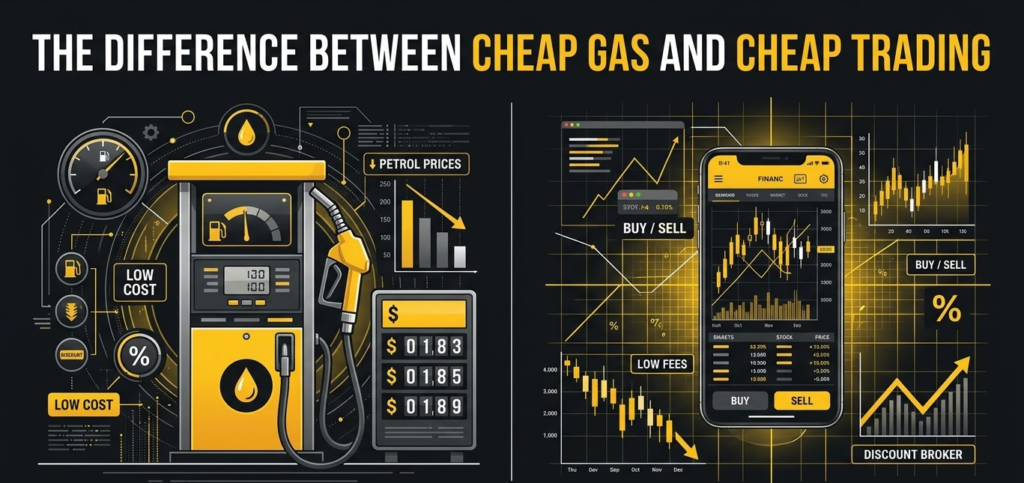
These two concepts are often mixed together.
Suppose Trade A costs $2 in gas and results in $9,900 of assets.
Trade B costs $5 in gas but results in $9,950 of assets.
Trade B is cheaper overall.
This is why experienced traders tend to think in terms of all-in execution cost.
Gas is only one component.
The same principle applies to Bitcoin.
A transaction with a lower sat/vB fee rate isn’t automatically cheaper if it requires substantially more bytes.
For example, consolidating ten UTXOs at 2 sat/vB may still cost more than spending one UTXO at 5 sat/vB because the first transaction contains considerably more input data.
So don’t ask only:
“What’s the fee rate?”
Ask:
“How much total block space am I consuming?”
Low-Fee Wallets and Layer-2 Networks
Layer 2 is one of the biggest structural changes in the Ethereum fee landscape.
Instead of forcing every transaction to compete for Ethereum Mainnet block space, rollups process transactions separately and periodically publish compressed information back to Ethereum.
Ethereum describes optimistic rollups as systems that execute transactions away from Mainnet while posting transaction data back to Ethereum, allowing multiple transactions to share settlement costs. (ethereum.org)
This is why networks such as Base, Arbitrum, and Optimism can offer much lower transaction costs under many conditions.
However, there’s an important catch:
You can’t just move assets to an L2 and assume everything will always be cheap.
Bridging itself can cost money.
Some applications exist only on Mainnet.
Some tokens have limited liquidity on particular L2s.
And withdrawing from certain networks can introduce additional costs or delays.
The best approach is to choose the network based on what you’re actually trying to do.
If you’re making dozens of small DeFi transactions, an L2 can be extremely attractive.
If you’re moving a large amount of capital between institutional counterparties, security, liquidity, and settlement considerations may matter more than saving a few dollars in gas.
When Paying a Higher Fee Actually Makes Sense
Trying to minimize every single cent can become counterproductive.
Imagine you’re transferring $200,000 worth of crypto.
You have two options:
- Transaction A: $1 fee, uncertain execution.
- Transaction B: $8 fee, reliable route and predictable confirmation.
I would happily pay the extra $7.
The purpose of fee optimization isn’t to make every transaction cost as little as mathematically possible.
It’s to eliminate unnecessary costs without compromising execution quality or security.
That’s an important distinction.
Don’t sacrifice security for a cheaper route
You should never connect your wallet to an unknown DEX simply because it promises lower fees.
Likewise, don’t approve an unfamiliar token contract because its interface claims to offer “zero-fee swaps.”
The cheapest transaction in crypto is the one that doesn’t result in losing your entire wallet.
A malicious smart contract can make a 0.1% gas saving completely irrelevant.
Before using a new protocol, verify the official domain, contract addresses, documentation, and community reputation.
A Practical Strategy for Active DeFi Users
If you use Ethereum or other EVM networks regularly, here’s the workflow I’d recommend.
Before the trade
Check the network you’re currently using.
If the application supports a reputable L2, compare its total execution cost against Mainnet.
Then compare the wallet’s native swap quote with the DEX or aggregator directly.
During the quote
Look beyond the headline fee.
Check the amount you’ll receive, the estimated gas, slippage, route, and any service charge.
If the wallet clearly charges a swap fee, factor it into your calculation.
MetaMask, for example, currently identifies a 0.875% MetaMask fee for its Swap product. (MetaMask)
Before signing
Read the transaction preview.
Make sure you’re interacting with the intended contract.
Check token amounts and approvals.
Don’t blindly sign because the wallet tells you that a transaction is “safe.”
After execution
Record the transaction hash for significant trades.
For business or professional trading activity, maintaining a simple record of fees and execution prices makes tax and accounting work much easier later.
A Practical Strategy for Bitcoin Holders
Bitcoin users should approach fee optimization differently.
First, use a wallet that provides meaningful control over coin selection.
Second, pay attention to your UTXO structure.
Third, monitor fee rates before consolidating.
Fourth, avoid creating unnecessary small UTXOs.
And finally, don’t move Bitcoin around simply because the network fee happens to look cheap.
Every transaction has an economic purpose.
If you’re paying $2 to optimize a $10 UTXO, you’re not optimizing anything.
For larger balances, however, thoughtful UTXO management can become very valuable.
FAQ: Lowest Fee Crypto Wallets
Does storing cryptocurrency in a software or hardware wallet cost money?
Generally, no. A standard non-custodial wallet does not charge a recurring storage fee simply because you hold crypto.
You pay when you perform blockchain transactions or use services that add their own charges.
Those costs can include network fees, swap fees, bridge fees, and fiat on-ramp charges.
What is the difference between a network fee and a wallet service fee?
A network fee is paid as part of getting a transaction processed by the blockchain.
A wallet service fee is an additional charge associated with a wallet’s own service.
Ethereum, for example, separates the base fee and priority fee within its transaction-fee model. (ethereum.org)
MetaMask separately documents a 0.875% fee for its Swap product. (MetaMask)
These are different costs and should be evaluated separately.
Which crypto wallet has the lowest swap fees?
There is no permanent winner because wallet pricing, DEX routes, liquidity, and network conditions change.
For EVM DeFi, Rabby is worth considering because of its DeFi-oriented architecture and transaction-aware interface.
For Solana, Phantom is a major option.
For Bitcoin, Sparrow is better viewed as a fee-optimization wallet rather than a token-swap wallet.
The best way to determine the cheapest option for a specific trade is to compare the final amount received after all fees.
Why can a “0% fee” swap still be expensive?
Because the displayed wallet fee is only one part of the transaction cost.
You can still pay through:
- DEX liquidity fees.
- Network gas.
- Price impact.
- Slippage.
- Bridge charges.
- Exchange-rate spread.
- Poor execution.
A zero wallet surcharge is useful, but it doesn’t guarantee the best final price.
Why are wallet-native swaps sometimes more expensive?
Wallet-native swaps are designed for convenience. The wallet handles routing and presents a simplified interface, but the provider may charge a service fee for that convenience.
MetaMask’s documentation currently lists a 0.875% MetaMask fee for its Swap service. (MetaMask)
For small trades, convenience may be worth it.
For large trades, compare the native quote with the same trade executed directly through a reputable DEX or aggregator.
How can Layer 2 networks reduce crypto transaction fees?
Layer 2 networks process transactions separately from Ethereum Mainnet and bundle transaction data before publishing it back to the base layer.
This spreads certain settlement costs across many transactions and can substantially reduce the cost per user transaction. (ethereum.org)
Actual fees vary by network and current demand, so don’t treat a fixed percentage such as “99% cheaper” as a universal guarantee.
How can Bitcoin users reduce transaction fees?
Bitcoin users can reduce costs by managing UTXOs intelligently, using efficient address formats, avoiding unnecessary transactions, and selecting an appropriate fee rate.
One particularly useful technique is UTXO consolidation: combining several small outputs into a larger one when network fees are relatively low.
This can reduce the number of inputs required in a future transaction.
Is Sparrow a good wallet for low-fee Bitcoin transactions?
Yes, particularly for experienced Bitcoin users who want detailed control over UTXOs, coin selection, fee rates, and transaction construction.
It’s less appropriate if your priority is simply a beginner-friendly mobile experience.
Sparrow’s strength is control.
Is MetaMask a low-fee crypto wallet?
MetaMask can be cost-efficient when used intelligently, particularly because it supports multiple networks and advanced transaction controls.
However, its native Swap product currently includes a 0.875% MetaMask fee, in addition to the quote rate and network fee. (MetaMask)
That doesn’t make MetaMask inherently expensive. It means you should compare its native swap quote with alternative execution routes when the trade is large enough for the difference to matter.
Is the cheapest wallet always the best wallet?
No.
Security, reliability, chain support, transaction simulation, hardware-wallet compatibility, and user experience can be much more important than saving a few cents.
I would rather use a reputable wallet with a transparent fee structure than save 0.1% by using an obscure application I don’t trust.
For large balances, security should come before fee optimization.
Final Verdict: Which Low-Fee Crypto Wallet Should You Choose?
If you’re looking for the lowest fee crypto wallet, don’t think in terms of a single universal winner.
Think in terms of your actual trading environment.
Rabby is one of the strongest choices for active EVM DeFi users who want a sophisticated interface and efficient Web3 execution.
Phantom makes the most sense if Solana is central to your activity and you want a polished mobile and browser experience.
Sparrow stands out for Bitcoin users who want serious control over UTXOs, transaction construction, and fee rates.
MetaMask remains extremely useful because of its enormous Web3 compatibility, but its native Swap product has a clearly disclosed 0.875% service fee, so large traders should compare its quote with direct DEX execution. (MetaMask)
Safe is a different category altogether. It isn’t primarily a “cheap swap wallet”; it’s a smart-account infrastructure platform that becomes interesting when you care about treasury management, batching, multi-user approvals, and account abstraction.
Ultimately, the cheapest crypto setup is rarely the wallet with the lowest advertised percentage.
It’s the setup that minimizes the total cost of execution:
Wallet fee + network fee + DEX fee + slippage + price impact + routing cost + bridge cost.
Once you start looking at crypto this way, fee optimization becomes much easier.
You stop chasing “zero-fee” marketing and start comparing what actually matters: how much crypto enters your wallet after the transaction is complete.
And for me, that’s the number worth watching.
The article is written from scratch rather than reproduced from a source. For fee figures and network mechanics that can change, I used current primary/official documentation rather than presenting the outline’s figures as permanent facts.