Key Specifications & Architectural Overview of PEPE
Pepe, commonly known by its ticker PEPE, is one of the best-known meme-based cryptocurrencies in the Ethereum ecosystem. Its identity is closely tied to Pepe the Frog, the internet character created by artist Matt Furie, but the cryptocurrency itself is an independent, unofficial project. It does not represent an official product, license, or partnership with Furie.
The token launched in April 2023 and quickly attracted attention from traders who were already familiar with the frog meme. Unlike projects that attempt to build an extensive collection of applications, governance systems, or staking products around their tokens, PEPE’s original proposition was relatively straightforward: create a highly recognizable meme coin, make it tradable on Ethereum, and let community interest determine how far it could go.
That simplicity is important. PEPE does not need its own blockchain to operate, and it does not require users to learn a new network or acquire a separate gas token. It uses Ethereum’s existing infrastructure, wallets, decentralized exchanges, and smart-contract standards.
The following table summarizes the main technical characteristics. Supply figures are rounded where appropriate; the live on-chain total can differ slightly from the familiar launch figure because tokens have been burned.
| Metric | PEPE specification |
|---|---|
| Token name | Pepe |
| Ticker | PEPE |
| Blockchain | Ethereum Mainnet |
| Token standard | ERC-20 |
| Contract address | 0x6982508145454Ce325dDbE47a25d4ec3d2311933 |
| Decimals | 18 |
| Original launch supply | Approximately 420,690,000,000,000 PEPE |
| Transaction tax | 0% at the token-contract level |
| Minting | No public mint function in the verified contract |
| Ownership | Contract ownership renounced |
| Initial liquidity | A large initial Uniswap position, with its LP tokens reportedly burned |
| Main value proposition | Meme culture, community recognition, and speculative trading |
| Official affiliation with Matt Furie | None |
You can verify the token’s identity, contract source code, token transfers, and supply information through the PEPE listing on Etherscan. This is a much safer starting point than relying on a token name or logo displayed by a random website. Other projects can copy the Pepe name and artwork, so the contract address matters.
There is also an important distinction between a token’s original supply and its current circulating supply. The commonly quoted 420.69 trillion figure describes the original issuance. It should not automatically be treated as the exact number of tokens currently available in circulation, especially after documented burns and transfers to inaccessible addresses.
What Makes PEPE Different From Other Meme Coins?
PEPE’s appeal is not based on a complicated financial model. It combines an instantly recognizable internet character with Ethereum’s established trading infrastructure and a token contract that does not impose a custom buy or sell tax.
That combination gives the project a few recognizable characteristics:
- Low-friction token transfers: The contract does not add a percentage-based tax to ordinary transfers.
- Familiar infrastructure: Ethereum wallets and decentralized exchanges can support the token through the ERC-20 standard.
- A recognizable cultural identity: The frog meme gives the asset a visual identity that traders can recognize quickly.
- A simple economic proposition: PEPE does not promise that holders will receive revenue, dividends, or guaranteed rewards.
I think that final point deserves more attention than it usually gets. A simple meme coin can be easier to understand than a project with dozens of loosely defined utility features, but simplicity does not automatically create sustainable demand. If people stop trading, sharing, and talking about the token, its market appeal can change quickly.
What is Pepe (PEPE), and How Does It Work?
At its core, PEPE is a fungible digital token deployed on Ethereum. It follows the ERC-20 standard, which defines a common set of functions that allow compatible wallets, exchanges, and smart contracts to interact with it.
In practical terms, this means you can hold PEPE in an Ethereum-compatible wallet, transfer it to another address, approve a decentralized exchange to use it, or swap it against another supported asset. The token does not need a separate blockchain to process these activities. Ethereum provides the underlying transaction execution and consensus infrastructure.
The ERC-20 token standard is widely used across decentralized finance. It establishes common functions such as transfer, balanceOf, approve, and transferFrom. These functions make it possible for different applications to interact with tokens in a predictable way.
For example, imagine that you want to exchange ETH for PEPE on a decentralized exchange. Your wallet connects to the exchange interface, you select the trading pair, and you approve or execute the relevant transaction. The exchange’s smart contracts handle the swap, while Ethereum validators process the transaction and update the relevant balances.
PEPE itself does not operate a separate network of validators. It relies on Ethereum.
PEPE Is an ERC-20 Token, Not a Standalone Blockchain
This distinction sounds obvious to experienced crypto users, but it is worth explaining because meme coins are often described as if they were independent blockchain networks.
A Layer-1 blockchain has its own consensus mechanism, native transaction environment, and network infrastructure. Ethereum is an example. Dogecoin is another, with its own blockchain and Proof-of-Work consensus.
PEPE is different. It is an asset issued within Ethereum’s existing environment. When you send PEPE, the transaction is recorded on Ethereum. When you interact with a decentralized exchange using PEPE, the exchange’s smart contracts execute on Ethereum. The token benefits from the network’s infrastructure without operating its own consensus system.
This arrangement offers convenience, but it also means PEPE inherits certain Ethereum-related costs and limitations. Network congestion can increase transaction fees, and the speed of a PEPE transaction depends on Ethereum’s transaction processing rather than a dedicated PEPE network.
The Official PEPE Contract Address
The Ethereum contract address associated with the widely recognized PEPE token is:
0x6982508145454Ce325dDbE47a25d4ec3d2311933
You should compare the entire address character by character before buying or transferring tokens. A different token can use the same name, ticker, or artwork without being the original PEPE contract.
The Etherscan contract page provides access to the verified source code and on-chain activity. It also allows users to inspect transfers and other contract information rather than relying entirely on a third-party token description.
One more practical point: the Ethereum version of PEPE should not be confused with bridged representations or unrelated tokens on other networks. A token carrying the same ticker on another chain may have a different contract, issuer, bridge arrangement, and risk profile.
How PEPE Works?
PEPE’s technical design is relatively compact. The token contract handles balances, transfers, approvals, and other ERC-20 operations. Ethereum handles transaction execution and consensus. Decentralized exchanges provide trading interfaces and liquidity pools.
The interesting part is not that PEPE introduced a new technical breakthrough. It is that a simple token contract, combined with an established blockchain and strong cultural recognition, was enough to create a major speculative asset.
To understand its security profile, you need to look at several separate components rather than relying on a single label such as “renounced” or “burned.”
Zero-Tax Architecture and Frictionless Transfers
PEPE is commonly described as a zero-tax ERC-20 token. In this context, zero tax means the token contract does not impose an additional percentage-based fee whenever someone buys, sells, or transfers PEPE.
Some meme tokens include custom fee logic. For example, a project might charge 5% on a buy and 5% on a sell, with the collected tokens directed toward a marketing wallet, liquidity pool, treasury, or burn address.
That is not the standard PEPE model.
With PEPE, the token contract’s ordinary transfer mechanism does not deduct a separate buy or sell tax. If you transfer 1,000,000 PEPE to another compatible wallet, the token contract does not automatically take an additional percentage as a protocol tax.
However, zero tax does not mean zero transaction cost.
You may still pay:
- Ethereum gas fees when executing on-chain transactions.
- Trading fees charged by a centralized exchange.
- Liquidity-provider or swap fees when using a decentralized exchange.
- Network or withdrawal fees imposed by a service provider.
- Price impact when trading against a liquidity pool with limited depth.
This distinction matters because people sometimes see “0% tax” and assume every transaction involving PEPE is free. It is not. The claim refers to the token’s own transfer-tax mechanism, not the entire trading process.
For a trader, the benefit is straightforward: there is no additional token-level buy or sell tax that needs to be included in the swap calculation. That can make the token easier to trade than fee-heavy meme coins, although actual execution costs still depend on the exchange, liquidity, and Ethereum network conditions.
Renounced Contract Ownership: What It Actually Means
One of PEPE’s frequently highlighted security characteristics is that its contract ownership has been renounced.
In a conventional Ownable smart contract, an owner address can access functions restricted by an onlyOwner permission. Depending on the contract design, those functions might allow the owner to change parameters, pause transfers, modify fees, or manage other administrative settings.
Renouncing ownership means transferring the owner role to the zero address. In a standard implementation, this prevents anyone from using owner-only functions because there is no longer an active owner account authorized to call them.
The verified PEPE contract includes an ownership mechanism based on OpenZeppelin’s Ownable implementation. Its source code includes functions such as owner(), renounceOwnership(), and transferOwnership(). The source also includes owner-restricted functions related to blacklisting and trading rules. The relevant code can be inspected directly in Etherscan’s verified PEPE contract source.
There is a subtle but important difference between saying ownership was renounced and saying the developers destroyed their private keys. Those are not the same technical event. Renouncement changes the contract’s owner address; it does not prove that every developer key, wallet, or project-controlled asset has been destroyed.
The practical implication is that owner-only contract functions should no longer be callable if the owner address is indeed the zero address. You can verify the current ownership state through the contract’s read functions and ownership-transfer events rather than relying only on promotional statements.
Does Renounced Ownership Make PEPE Completely Safe?
No. It reduces certain administrative risks, but it does not eliminate the broader risks of owning or trading the token.
Renounced ownership does not protect you from:
- A sharp fall in market demand.
- Large holders selling substantial positions.
- Low liquidity or significant price impact.
- Fake PEPE tokens and phishing websites.
- Malicious wallet approvals.
- Compromised centralized exchanges.
- Vulnerabilities in other smart contracts you interact with.
- Problems involving bridges or third-party applications.
It is also important to distinguish the token contract from the wider project ecosystem. A renounced token contract does not mean that every wallet associated with the original team, every liquidity position, or every third-party application is decentralized or risk-free.
I would treat renouncement as one useful item in a security checklist, not as a guarantee that you cannot lose money.
Burned Liquidity Provider Tokens and the Uniswap Liquidity Pool
Liquidity is essential to decentralized token trading. Without it, buyers and sellers may struggle to exchange an asset at a reasonable price.
On a decentralized exchange such as Uniswap, liquidity providers deposit token pairs into a pool. In return, they receive liquidity provider tokens, often called LP tokens, representing their share of the pool.
Those LP tokens matter because they provide the ability to withdraw the underlying liquidity, subject to the pool’s rules.
The original PEPE launch was associated with a large Uniswap liquidity allocation. Contemporary coverage from Kraken’s May 2023 PEPE explainer reported that approximately 93% of the original supply was sent to liquidity pools and that the corresponding LP tokens were burned.
Burning LP tokens is intended to make the represented liquidity permanently inaccessible through the ordinary withdrawal mechanism. If the tokens representing a liquidity position are sent to an irrecoverable address, the holder can no longer use them to redeem that position.
That can reduce the risk of an ordinary liquidity withdrawal by the original LP-token holder. It does not mean the token price cannot collapse, nor does it guarantee that every PEPE trading pool across every exchange has permanently locked liquidity.
You should also separate two different events:
| Security action | What it means | What it does not guarantee |
|---|---|---|
| Renouncing token ownership | Removes the active owner role from the token contract | Protects against market losses or third-party risks |
| Burning LP tokens | Makes the corresponding liquidity position inaccessible through those LP tokens | Guarantees liquidity across all exchanges |
| Burning PEPE tokens | Permanently removes the burned tokens from supply | Creates automatic demand or price appreciation |
| Verifying contract source code | Allows users to inspect the published code | Proves the entire project is safe |
A project can have burned LP tokens and still carry significant market, concentration, or operational risks. That is why I would never use the phrase “rug-pull proof” as a description of PEPE.
The Team Multisig: A Different Security Consideration
The initial launch distribution also included a smaller allocation held in a multisignature wallet for purposes such as exchange listings, bridges, and liquidity arrangements.
A multisig wallet requires multiple authorized signers to approve transactions. This can reduce the risk associated with a single compromised private key, but its security depends on the signer arrangement and approval threshold.
The distinction became particularly relevant in August 2023, when a large amount of PEPE associated with the project reserve moved out of the multisig following an internal dispute. Later reporting described a change to the multisig signing threshold and the removal of approximately 16 trillion PEPE from the reserve.
The episode did not mean that the ERC-20 contract itself had been hacked. It demonstrated that project-controlled wallets and token contracts are separate security surfaces. You can have a token contract with renounced ownership while a separate multisig still holds assets and remains subject to signer risk.
This is a useful lesson for evaluating any crypto project: always ask which component is decentralized, which component is controlled by a group of people, and which assets remain under administrative custody.
PEPE Tokenomics
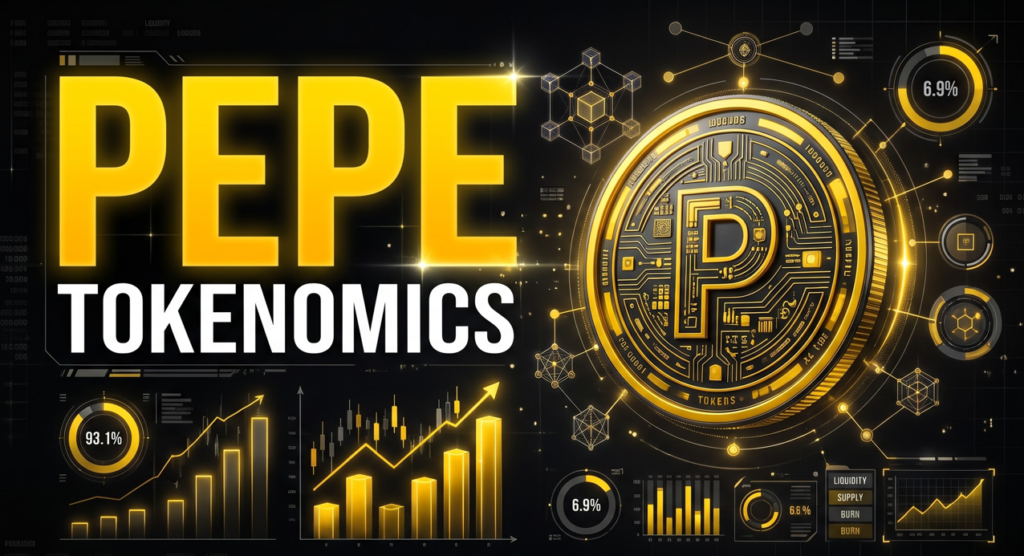
Tokenomics is often where meme-coin descriptions become confusing. PEPE is regularly promoted as having a fixed supply of 420.69 trillion tokens and a deflationary design. Both statements need a little context.
The original supply is easy to understand. The ongoing burn story is more nuanced.
Why Does PEPE Have a 420.69 Trillion Token Supply?
PEPE’s original supply was approximately:
420,690,000,000,000 PEPE
The number was selected as a reference to two familiar internet-culture jokes: 420 and 69. These numbers have long circulated in online communities and meme culture, making them a natural fit for a token built around an internet character.
This is not a supply figure derived from a financial model, a revenue forecast, or a calculation of how many tokens the ecosystem needs. It is a cultural choice.
The large number also creates a very small nominal unit price when the token is divided across its enormous supply. That can make the asset appear inexpensive to newcomers, even though the number of tokens someone can buy tells you very little about whether the asset is undervalued.
For example, a token priced at a fraction of a cent is not automatically cheaper in an investment sense than a token priced at $100. The more meaningful comparison involves market capitalization, circulating supply, liquidity, and the value that buyers are willing to assign to the entire asset.
How Was the Original Supply Distributed?
The original PEPE launch allocation is commonly described in two broad categories:
| Initial allocation | Approximate share | Intended role |
|---|---|---|
| Uniswap liquidity pool | 93.1% | Establish initial on-chain trading liquidity |
| Team-controlled multisig | 6.9% | Exchange listings, bridges, and additional liquidity arrangements |
These percentages describe the initial launch distribution, not necessarily the current ownership structure.
The liquidity allocation was associated with burned LP tokens, while the smaller multisig allocation remained a separate pool of project-controlled assets. Later events affected that reserve, including the movement of approximately 16 trillion PEPE in August 2023 and a subsequent burn of around 6.9 trillion PEPE in October 2023.
The October event is particularly important when discussing PEPE’s supply. It was a substantial discretionary burn, not evidence that the token automatically destroys a fixed percentage of every transaction.
For background on the original token distribution and launch structure, see Kraken’s PEPE overview and the PEPE token’s on-chain record.
Is 420.69 Trillion PEPE a Hard-Capped Supply?
The verified contract is important here.
The source code shows that the constructor mints the initial supply. It does not expose a public function that allows an owner to create additional tokens after deployment. The contract also includes a public burn function that allows a holder to burn tokens from their own balance.
That gives PEPE two relevant supply characteristics:
- There is no ordinary owner-controlled mint function in the verified contract.
- Tokens can be permanently destroyed through the burn mechanism.
The first characteristic limits the possibility of additional issuance through the token contract. The second means that the actual supply can decline when tokens are burned.
The precise on-chain figure may therefore be slightly different from the rounded 420.69 trillion launch number. Etherscan displays the live token information and supply data, which can change as on-chain events occur. You should use the explorer rather than treating an old article’s supply figure as a permanent live reading.
A useful distinction is:
- Initial supply: The number of tokens created when the contract was deployed.
- Total supply: The amount currently recorded by the token contract after burns.
- Circulating supply: The amount considered available to the market under a particular data provider’s methodology.
- Maximum supply: The upper limit implied by the contract’s issuance design, where no additional minting is available.
Different market-data platforms can report slightly different supply figures because they may use different methodologies for classifying inaccessible or burned tokens.
PEPE’s Deflationary Burn Mechanism: What Actually Happens?
The word “deflationary” is often used loosely in crypto marketing. In PEPE’s case, it is more accurate to say that the contract supports voluntary token burns and that significant discretionary burns have occurred.
A burn permanently removes tokens from the usable supply. Depending on the implementation, this can happen when tokens are sent to an irrecoverable address or when a contract executes a burn function that reduces its recorded total supply.
PEPE’s verified contract includes a burn(uint256 value) function. A holder can call this function to destroy tokens from their own balance. The contract reduces the total supply when the burn succeeds.
However, the presence of a burn function does not mean that every transaction automatically destroys a portion of PEPE.
There is no reason to assume that a fixed percentage of every buy, sell, or transfer is burned. The token’s 0% transaction-tax design is inconsistent with the common model in which a transfer tax automatically redirects part of each transaction to a burn address.
This difference is crucial when evaluating the keyword PEPE deflationary burn rate.
A token can have a mechanism that allows supply reduction without having a predictable or recurring burn rate. If the amount burned depends on voluntary actions or discretionary decisions, the future rate is uncertain.
The October 2023 Burn
One of the most widely reported PEPE supply events took place in October 2023, when approximately 6.9 trillion PEPE associated with the project’s remaining reserve was burned.
This was a meaningful reduction relative to the original supply, but it was a specific event rather than an automatic fee mechanism.
The distinction matters because investors sometimes assume that a deflationary token must become progressively scarcer at a predictable pace. That conclusion does not follow from a single burn event.
A more careful way to describe PEPE is:
- Its contract does not provide a normal public minting mechanism.
- Its contract allows holders to burn their own tokens.
- A significant discretionary burn occurred in October 2023.
- Future burns are not guaranteed by a fixed schedule.
- There is no contractual promise that a particular percentage of trading volume will be burned.
You can inspect the token’s transfer history and contract activity on Etherscan. Look for transactions involving the zero address or recognized burn addresses, and distinguish actual supply-reducing events from ordinary transfers to large wallets.
Does a Lower Supply Automatically Increase PEPE’s Price?
No. This is one of the most common misunderstandings in tokenomics.
A reduction in supply can influence market dynamics, but price also depends on demand. If the number of available tokens falls while demand remains stable or increases, scarcity may contribute to upward price pressure. If demand collapses, a smaller supply does not guarantee a higher price.
Consider a simplified example.
Imagine a token has 100 units and buyers collectively want to own 50 units. If 10 units are permanently burned, the remaining supply becomes 90. That may change the balance between buyers and sellers.
But if those buyers lose interest and only want to own 5 units, the burn does not protect the price. Demand has changed much more dramatically than supply.
For PEPE, the most important market drivers remain sentiment, liquidity, exchange access, community activity, and broader crypto-market conditions. A burn can become a positive narrative, but it cannot manufacture lasting demand by itself.
What Is PEPE Coin Used For?
The keyword “what is PEPE coin used for” deserves a direct answer: PEPE is primarily used as a tradable meme cryptocurrency and speculative digital asset.
It can be transferred between Ethereum-compatible wallets, traded on centralized exchanges, and swapped through decentralized exchanges. It can also be used in applications that choose to support the token.
But these basic capabilities should not be confused with a comprehensive utility ecosystem.
Trading and Speculation
The most obvious use case is trading. Users buy PEPE because they expect its market price to rise, because they want exposure to meme-coin culture, or because they are trading short-term volatility.
That demand can be influenced by social-media discussions, exchange listings, market cycles, influencer attention, and the performance of other meme coins.
Unlike a token that represents a claim on a business or protocol revenue stream, PEPE does not give holders an automatic right to dividends or a share of operating income. Holding PEPE does not mean you are entitled to a portion of exchange fees or revenue generated by an associated company.
Peer-to-Peer Transfers
PEPE can be transferred between compatible Ethereum wallets in the same general way as other ERC-20 tokens.
This makes it possible to send the token without relying on a centralized exchange for every transaction. The recipient needs a compatible wallet and must use the correct network and token contract.
However, transferability alone does not make PEPE a widely accepted payment currency. Whether a merchant or service provider accepts it depends on that provider.
Decentralized Exchange Swaps
PEPE can be traded through decentralized exchanges that support its Ethereum liquidity pools. A user can connect a compatible wallet and exchange PEPE for ETH or another supported token.
This is a practical use of the ERC-20 standard: the token can interact with existing smart-contract infrastructure without requiring a new blockchain.
Still, the quality of a swap depends on liquidity, pool depth, network fees, and the price impact of the trade. A zero-tax token can still produce an expensive or unfavorable transaction if the market is volatile or the pool is thin.
Community and Meme-Culture Participation
PEPE also has a cultural use. People hold, share, trade, and discuss the token as part of the wider internet meme economy.
For many holders, this cultural dimension is the main reason the token exists. The frog character is recognizable, easy to turn into new memes, and already has a long history in online communities.
That can create a strong network effect. A meme becomes more visible when people share it, and the token can attract attention when the meme spreads through crypto communities.
But cultural relevance is not a contractual utility. It can change quickly, and it does not guarantee that the token will retain its market position.
What PEPE Does Not Automatically Provide
To avoid overstating its capabilities, it is useful to be clear about what holding PEPE does not necessarily give you.
| Feature | Does holding PEPE automatically provide it? |
|---|---|
| Dividends | No |
| Guaranteed staking income | No |
| Claim on project revenue | No |
| Voting rights in a formal DAO | No |
| Ownership of Matt Furie’s artwork | No |
| Guaranteed payment acceptance | No |
| ERC-20 transfers | Yes |
| Trading on supported exchanges | Yes |
| Voluntary token burning | Supported by the contract |
The absence of these features does not make PEPE technically invalid. It simply means you should evaluate it for what it is: a meme-driven crypto asset, not a conventional equity investment or a revenue-generating protocol token.
PEPE vs Dogecoin (DOGE) vs Shiba Inu (SHIB)
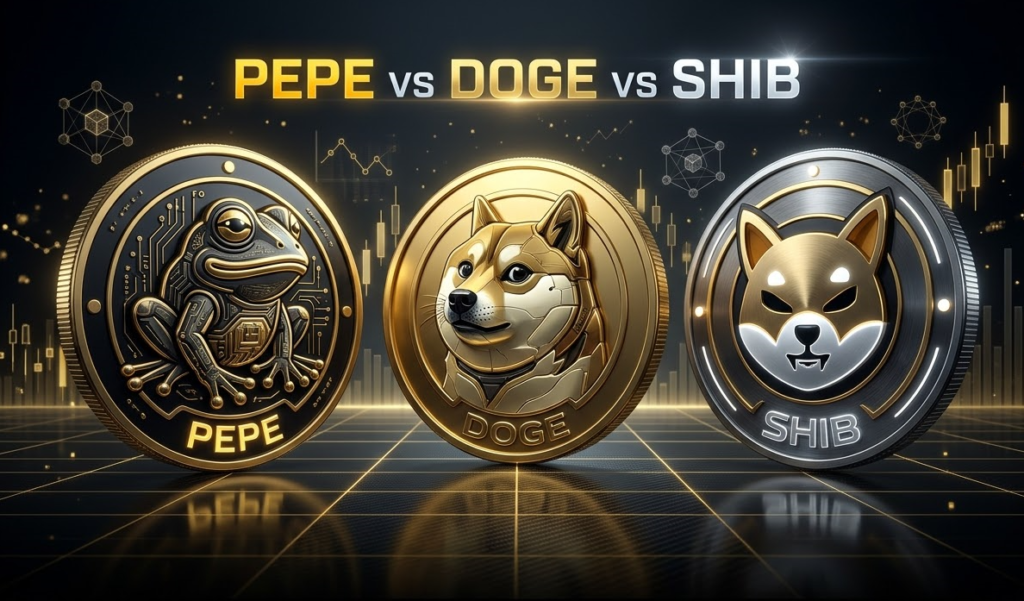
PEPE, Dogecoin, and Shiba Inu are frequently discussed together because all three draw heavily on internet meme culture. Yet their technical structures and ecosystem ambitions are quite different.
Dogecoin is a standalone blockchain with its own native asset and Proof-of-Work consensus. PEPE is an ERC-20 token on Ethereum. Shiba Inu began as an Ethereum token and has developed a wider ecosystem that includes Shibarium, an Ethereum Layer-2 network.
These differences affect how each asset operates, what infrastructure it relies on, and how users interact with it.
Native Blockchain vs. Smart Contract Tokens
The most fundamental distinction is the underlying network.
Dogecoin operates its own blockchain. Its nodes maintain the ledger, and miners use the Scrypt Proof-of-Work algorithm to secure the network. The Dogecoin Core project repository describes the software and its Scrypt-based Proof-of-Work design.
PEPE, on the other hand, is issued on Ethereum. It does not have independent miners or validators dedicated to PEPE. Ethereum’s network processes its transactions and smart-contract interactions.
Shiba Inu also originated as an Ethereum ERC-20 token. Its ecosystem later introduced Shibarium, which its documentation describes as an Ethereum Layer-2 scaling solution. You can find the network details in the official Shibarium documentation.
The differences can be summarized as follows:
| Dimension | PEPE | Dogecoin (DOGE) | Shiba Inu (SHIB) |
|---|---|---|---|
| Primary structure | Ethereum ERC-20 token | Standalone blockchain | Ethereum ERC-20 token with wider ecosystem |
| Main network | Ethereum | Dogecoin blockchain | Ethereum and Shibarium |
| Consensus/security | Relies on Ethereum | Scrypt Proof-of-Work | Ethereum for SHIB’s original token; Shibarium has its own Layer-2 architecture |
| Native gas asset | ETH for Ethereum transactions | DOGE for Dogecoin network fees | ETH on Ethereum; BONE is used for Shibarium gas |
| Main cultural identity | Pepe the Frog meme | Doge/Shiba Inu dog meme | Shiba Inu dog meme |
| Ecosystem emphasis | Primarily meme-coin trading and culture | Payments, transfers, and currency-style use | Broader token and application ecosystem |
This table compares the broad architecture, not every application or market listing associated with each asset. Ecosystems evolve, and users should check the current network documentation before interacting with a token or bridge.
Pure Cultural Momentum vs Broader Utility Ecosystems
PEPE’s original appeal is relatively direct. It is a meme coin whose identity is built around a familiar internet character and a simple token model.
Dogecoin has a different history. It was created as a cryptocurrency inspired by a dog meme, but over time it developed a community around tipping, transfers, and payment-oriented use cases. Its independent blockchain gives it a different technical role from an Ethereum token.
Shiba Inu has pursued a broader ecosystem strategy. Beyond SHIB itself, its ecosystem includes other tokens and infrastructure, with Shibarium intended to support applications and lower-cost transactions.
That does not automatically make one token superior to the others. A more extensive ecosystem can create more possible use cases, but it also introduces more components to evaluate. A simpler token may be easier to understand, but it can remain heavily dependent on speculative interest.
I would compare them through three questions:
First, what creates demand? PEPE is strongly tied to meme recognition and trading sentiment. Dogecoin has a long-standing currency-oriented community. Shiba Inu has combined meme culture with ecosystem development.
Second, what infrastructure does the asset rely on? DOGE uses its own chain, while PEPE and SHIB rely on Ethereum for their original ERC-20 tokens. Shibarium adds another network layer to the SHIB ecosystem.
Third, what does a holder actually receive? A token’s branding and roadmap do not automatically create financial rights. You should check the actual token contract and ecosystem documentation rather than assuming that a large community or a long list of features translates into holder revenue.
Which Meme Coin Model Is More Sustainable?
There is no universal answer. Sustainability depends on the ability to maintain user interest, liquidity, technical reliability, and a reason for people to continue holding or using the asset.
A blockchain-based currency can benefit from payment integrations and network activity. A broader ecosystem can create additional reasons for users to participate. A culture-driven meme coin can benefit from brand recognition and community momentum.
Each model has weaknesses.
PEPE’s simplicity means it has relatively little protocol complexity, but its demand can be highly sensitive to sentiment. Dogecoin’s independent network requires ongoing participation from miners and users. Shiba Inu’s larger ecosystem introduces additional technical and operational dependencies.
If you are comparing these assets as investments, do not choose based on the number of features alone. A complicated roadmap is not proof of value, and a simple token is not automatically a poor asset. The important question is whether the market demand supporting the token can persist.
Common Pitfalls and Misconceptions About Pepe
PEPE’s popularity has created plenty of confusion. Some claims are technically accurate but incomplete, while others exaggerate what the token can do.
Here are the misunderstandings I would clear up before anyone buys it.
Misconception: PEPE Was Officially Created or Endorsed by Matt Furie
It was not.
Pepe the Frog originated in Matt Furie’s comic Boy’s Club, which began appearing in 2005. The character later became a widely circulated internet meme.
The cryptocurrency is a separate project. Its creators are not publicly identified as Matt Furie, and the token is not an official release from the artist.
Kraken’s explanation of PEPE’s origins makes this distinction clear, noting that the crypto project has no affiliation with Furie.
This matters for two reasons. First, owning PEPE does not give you ownership of the original character or its intellectual property. Second, the token’s use of a familiar meme should not be interpreted as an endorsement by the artist.
Misconception: PEPE Charges Hidden Buy and Sell Taxes
The token is commonly described as a zero-tax ERC-20 asset, and its verified contract does not implement a conventional percentage-based transfer tax.
However, traders can still encounter other costs. Ethereum gas fees, exchange trading fees, spreads, and liquidity-provider fees are separate from a token-level tax.
A user who buys PEPE through a centralized exchange may pay that exchange’s trading fee. Someone swapping PEPE through a decentralized exchange may pay the applicable pool fee and Ethereum gas.
So the accurate statement is not “PEPE trading is free.” It is “the PEPE token contract does not impose an additional buy, sell, or transfer tax.”
Misconception: Renounced Ownership Means There Are No Security Risks
Renouncing contract ownership is a meaningful security measure because it removes the active owner role. It does not make every part of the PEPE ecosystem immutable or eliminate every possible attack.
For example, a user’s wallet can still be compromised. A fake token can still imitate PEPE. A malicious website can still trick someone into approving an unsafe transaction.
The multisig incident in 2023 also demonstrated that project-controlled wallets are separate from the token contract. Even if a token contract has no active owner, assets held by a separate wallet can remain subject to signer decisions.
Security is not a single checkbox. It involves contract permissions, wallet custody, liquidity arrangements, exchange infrastructure, and user behavior.
Misconception: PEPE Is a Standalone Layer-1 Blockchain
PEPE is an Ethereum ERC-20 token. It does not have its own independent consensus mechanism, validator network, or native blockchain.
When you transfer PEPE on Ethereum, Ethereum processes the transaction. When you trade PEPE through an Ethereum-based decentralized exchange, the relevant smart contracts execute on Ethereum.
Calling PEPE a Layer-1 blockchain is therefore incorrect.
Misconception: PEPE Is Automatically Deflationary Every Time Someone Trades
PEPE has a burn function and has experienced significant discretionary burns. That does not mean every trade destroys tokens.
A transaction-tax token might automatically allocate a portion of each transfer to a burn address. PEPE’s zero-tax model is different.
The presence of a burn function means tokens can be destroyed under the supported contract mechanism. It does not establish a fixed daily, monthly, or annual burn schedule.
Misconception: A Huge Token Supply Means PEPE Cannot Become Valuable
A large supply does not, by itself, determine whether a token can have a high market capitalization.
The market price is a function of both supply and demand. A token with hundreds of trillions of units can still have a substantial market value if enough buyers are willing to purchase it.
The reverse is also true: a small token supply does not guarantee a high valuation.
When comparing meme coins, market capitalization and liquidity are more informative than the number of zeros in the token price.
Misconception: Every Token Named PEPE Is the Same Asset
This is one of the most practical risks for new users.
Anyone can create an ERC-20 token and give it the name “Pepe” or the ticker “PEPE.” A token listing on a website or a decentralized exchange does not automatically prove that it is the widely recognized Ethereum asset.
Always verify the contract address. For the Ethereum PEPE token discussed in this guide, use the address shown on Etherscan.
Do not copy an address from a random social-media reply, unsolicited message, or advertisement.
PEPE System Architecture and Entity Relationship Map
The following diagram shows how the main components fit together. It is intentionally simple: PEPE’s architecture is much easier to understand when you separate the cultural identity, token contract, underlying blockchain, and market infrastructure.
                         ┌─────────────────────────────┐
                         │       Meme Origin           │
                         │                             │
                         │ Matt Furie's Pepe the Frog  │
                         │ Unofficial crypto tribute   │
                         └──────────────┬──────────────┘
                                        │
                                        ▼
┌─────────────────────────────────────────────────────────────────┐
│                       Pepe Cryptocurrency                       │
│                              PEPE                               │
└───────────────────────────────┬─────────────────────────────────┘
                                │
              ┌─────────────────┼──────────────────────┐
              │                 │                      │
              ▼                 ▼                      ▼
  ┌──────────────────┐  ┌──────────────────┐  ┌────────────────────┐
  │ Technical Layer  │  │ Token Economics  │  │ Contract Security  │
  │                  │  │                  │  │                    │
  │ Ethereum ERC-20  │  │ 420.69T initial  │  │ Ownership          │
  │ Smart contract   │  │ supply           │  │ renounced          │
  │ 18 decimals      │  │ No mint function │  │ 0% transfer tax    │
  └────────┬─────────┘  │ Voluntary burns  │  │ Burned LP tokens   │
           │            └──────────────────┘  └────────────────────┘
           │
           ▼
  ┌────────────────────────────┐
  │ Ethereum Infrastructure    │
  │                            │
  │ Network consensus          │
  │ Transaction execution      │
  │ Gas fees                   │
  └─────────────┬──────────────┘
                │
                ▼
  ┌────────────────────────────┐
  │ Market and User Layer      │
  │                            │
  │ Compatible wallets         │
  │ Centralized exchanges      │
  │ Uniswap and other DEXs     │
  │ Community and trading      │
  └────────────────────────────┘
The key relationship is straightforward: PEPE is the token, Ethereum is the network, and exchanges and wallets are the infrastructure through which users hold and trade it.
The meme itself is a cultural reference, not a technical component of the blockchain. Similarly, token burns and liquidity arrangements affect the asset’s economics but do not change the fact that PEPE is an ERC-20 token.
How to Acquire and Secure PEPE Tokens
If you decide to buy PEPE, take your time with the setup. The token’s zero-tax design does not protect you from sending funds to the wrong address or interacting with a fake contract.
There are two common ways to acquire it: through a centralized exchange or through a decentralized exchange. The following guide focuses on the self-custody route using an Ethereum-compatible wallet and a DEX.
Phase 1: Prepare an Ethereum-Compatible Wallet
Start by choosing a wallet that supports Ethereum and ERC-20 tokens. MetaMask and Trust Wallet are two familiar options, although you should always download wallet software through its verified website or official application-store listing.
When creating a self-custody wallet:
- Follow the wallet’s setup instructions.
- Write down the recovery phrase and store it somewhere secure and offline.
- Never share your recovery phrase with anyone.
- Use a strong device password and enable available security protections.
- Consider a hardware wallet if you plan to hold a significant amount of crypto.
Your recovery phrase is effectively the master key to your wallet. Anyone who obtains it may be able to control your assets. A legitimate support agent should never need you to send it to them.
Phase 2: Fund the Wallet With ETH
Because PEPE is an Ethereum token, you generally need ETH to pay Ethereum gas fees when interacting with Ethereum-based smart contracts.
You can acquire ETH through a supported centralized exchange and withdraw it to your Ethereum wallet address.
Before confirming the withdrawal, check:
- The destination wallet address.
- The selected network.
- The exchange’s withdrawal fee.
- Whether the wallet supports the asset on the chosen network.
If you withdraw ETH through the wrong network, recovering it may be difficult or impossible. Do not assume that every network using an EVM-compatible address is interchangeable.
You should also leave enough ETH in the wallet to cover the swap and any later transactions. Spending the entire ETH balance on PEPE can leave you unable to move or sell the tokens until you obtain more ETH.
Phase 3: Open a Decentralized Exchange
For an Ethereum-based swap, you can use a decentralized exchange such as Uniswap.
Open the exchange directly through its verified website. Avoid clicking unsolicited trading links in social-media posts or private messages.
Connect your Ethereum wallet and confirm that it is using Ethereum Mainnet.
A decentralized exchange does not need to take custody of your wallet in the same way a centralized exchange does. Instead, your wallet signs the transactions required to interact with the exchange’s smart contracts.
Read each wallet confirmation carefully. A swap approval and a token transfer are not necessarily the same transaction.
Phase 4: Verify the PEPE Contract Address
Before selecting the token, verify that the contract address matches the recognized Ethereum PEPE contract:
0x6982508145454Ce325dDbE47a25d4ec3d2311933
You can cross-check it using Etherscan’s PEPE token page.
Do not rely on the token name alone. A fake token can use the same name, ticker, and logo.
If the address does not match, stop and investigate before proceeding.
Phase 5: Review the Swap Before Confirming
Once you have selected the correct token, enter the amount of ETH you want to swap.
Review the following details:
- The estimated amount of PEPE you will receive.
- The exchange’s applicable swap fee.
- The estimated Ethereum gas cost.
- The price impact of your trade.
- The slippage tolerance.
- The minimum amount you will receive if the price changes before execution.
Slippage tolerance is particularly important during volatile market conditions. If the price moves beyond your permitted range before the transaction executes, the swap may fail or revert.
Do not set an unusually high slippage tolerance simply because a website or stranger tells you to. A higher setting can expose you to unfavorable execution.
Because PEPE has no token-level transaction tax, you do not need to add a custom tax allowance to account for a conventional PEPE buy or sell fee. You still need to account for the DEX fee and Ethereum gas.
Phase 6: Confirm the Transaction and Check Your Balance
After reviewing the details, confirm the transaction in your wallet.
Wait for the transaction to be processed by Ethereum. You can use the transaction hash to inspect its status through Etherscan.
If the wallet does not display PEPE automatically, you may need to add the token using its verified contract address.
Once the transaction is complete, check your token balance and make sure the received asset is the correct PEPE contract.
Phase 7: Protect Your PEPE Holdings
Buying the token is only one part of the process. You also need to protect your wallet.
A few sensible habits can reduce avoidable risks:
- Never disclose your recovery phrase or private key.
- Revoke unnecessary token approvals when appropriate.
- Avoid signing transactions you do not understand.
- Bookmark official exchange and wallet websites.
- Check the contract address before every new interaction.
- Be cautious of fake airdrops and unsolicited claims.
- Consider a hardware wallet for larger long-term holdings.
Remember that a legitimate token contract does not make every website that mentions the token legitimate. Scammers often use popular tickers to make phishing pages look convincing.
Risks to Understand Before Buying PEPE
PEPE’s technical simplicity should not be confused with low investment risk. Meme coins can experience extreme price movements because their market demand is often driven by attention, sentiment, and speculative positioning.
Before buying, consider the following risks.
Market Volatility
PEPE can rise or fall sharply as traders respond to social-media trends, exchange activity, and broader market conditions.
A strong rally does not guarantee that momentum will continue. Similarly, a period of weak performance does not guarantee a recovery.
You should decide how much risk you can tolerate before entering a position rather than making that decision while the market is moving quickly.
Concentration Risk
A token can have hundreds of thousands of holders while a relatively small number of addresses still control a substantial portion of its supply.
Large wallets may belong to exchanges, liquidity pools, custodians, or individual holders. An address balance does not always reveal the beneficial owner, so holder-distribution data requires careful interpretation.
Still, concentration matters. If a large holder sells a significant amount into limited liquidity, the market price can come under pressure.
Liquidity and Execution Risk
Even if PEPE has substantial trading activity, the price you receive depends on the venue and size of your trade.
A large swap can move the price against you. During volatile periods, spreads may widen, liquidity can shift, and transactions may execute at less favorable prices than expected.
Zero transaction tax does not remove these risks.
Regulatory and Exchange Risk
Crypto exchanges operate under different rules across jurisdictions. A token’s availability on one platform does not mean every exchange will list or continue supporting it.
Trading access can change because of local regulation, exchange policies, liquidity requirements, or risk assessments.
Users should check the rules that apply in their own country and the terms of the exchange they intend to use.
Intellectual Property and Branding Risk
PEPE’s connection to Pepe the Frog is cultural rather than an official commercial partnership with Matt Furie.
The distinction matters because the token’s identity uses a character that has an independent creator and history. Holding the token does not grant ownership of the original artwork or associated intellectual-property rights.
Smart-Contract and Third-Party Risk
The verified token contract is only one component of the wider trading process.
A decentralized exchange, wallet, bridge, or third-party application may introduce its own vulnerabilities. A malicious approval can also allow a spender to move tokens from a wallet within the limits of the approval.
Before interacting with any application, verify its domain, contract addresses, and transaction permissions.
FAQ about Pepe
What Is Pepe and How Does It Work?
Pepe (PEPE) is an Ethereum-based ERC-20 meme cryptocurrency launched in April 2023 as an unofficial tribute to the Pepe the Frog internet meme created by Matt Furie. It operates through an Ethereum smart contract that supports token balances, transfers, approvals, and voluntary burns. The token is commonly associated with a zero-transaction-tax model and a large original supply of approximately 420.69 trillion tokens.
What Is the Total Supply of PEPE Tokens?
PEPE’s original launch supply was approximately 420,690,000,000,000 tokens, or 420.69 trillion PEPE. The verified contract does not provide a normal public mint function, while its burn function allows holders to destroy tokens. Consequently, the live total supply can be slightly lower than the original issuance figure. Check Etherscan’s PEPE token page for current on-chain data.
Does PEPE Charge a Transaction Tax?
No. PEPE is generally described as a zero-tax ERC-20 token, meaning its contract does not impose an additional percentage-based tax on ordinary buys, sells, or transfers. However, users may still pay Ethereum gas fees, centralized exchange trading fees, spreads, and decentralized exchange swap fees.
Is PEPE Officially Affiliated With Matt Furie?
No. Pepe the Frog was created by Matt Furie for his comic Boy’s Club, but the PEPE cryptocurrency is an independent project. It is not an official Matt Furie product, and holding PEPE does not give holders ownership of the original character or its intellectual property.
How Does PEPE Differ From Dogecoin and Shiba Inu?
PEPE is an Ethereum ERC-20 token. Dogecoin operates its own blockchain and uses Scrypt Proof-of-Work, while Shiba Inu began as an Ethereum token and has developed a broader ecosystem that includes Shibarium, an Ethereum Layer-2 network. Their technical structures, communities, and ecosystem strategies are therefore different.
Is PEPE a Deflationary Cryptocurrency?
PEPE supports voluntary token burns, and a substantial discretionary burn took place in October 2023. Its contract does not automatically burn a fixed percentage of every transaction, however. It is more accurate to describe PEPE as a token with a burn function and a history of discretionary supply reductions than as an asset with a predictable ongoing burn rate.
Can PEPE Be Mined?
No. PEPE is an ERC-20 token issued on Ethereum, not a Proof-of-Work cryptocurrency with its own mining network. Ethereum validators process transactions involving PEPE, but users do not mine PEPE by operating dedicated PEPE mining hardware.
Is PEPE an Ethereum Layer-1 Coin?
No. PEPE is a token deployed on Ethereum. It does not have its own independent blockchain, consensus mechanism, or validator network. Its transactions rely on Ethereum’s infrastructure.
Where Can I Buy PEPE?
PEPE may be available through centralized cryptocurrency exchanges and decentralized exchanges that support the token. For on-chain trading, users should verify the Ethereum contract address before swapping. The recognized contract is 0x6982508145454Ce325dDbE47a25d4ec3d2311933, which can be checked through Etherscan.
Does Holding PEPE Generate Passive Income?
Holding PEPE does not automatically provide dividends, protocol revenue, or guaranteed staking rewards. Some third-party platforms may offer products involving PEPE, but those products have their own terms and risks. They should not be confused with an income mechanism built into the original token contract.
Is PEPE Safe to Buy?
There is no way to guarantee that PEPE is safe as an investment. Its verified contract, renounced ownership, zero-tax design, and reported burned initial LP tokens are relevant technical characteristics, but they do not remove market volatility, liquidity risk, wallet security threats, or the possibility of substantial financial loss. You should research the asset and only risk money you can afford to lose.
Final Thoughts
PEPE is a useful example of how internet culture and existing blockchain infrastructure can combine to create a widely traded digital asset. Its technical foundation is straightforward: an ERC-20 contract on Ethereum, a large original token supply, no conventional transaction tax, and a burn function that allows supply reduction.
That simplicity is part of its appeal. Users do not need to learn a new blockchain or understand a complicated protocol architecture just to hold and trade PEPE. They can use familiar Ethereum wallets and exchanges, while the token’s recognizable cultural identity helps it stand out in a crowded meme-coin market.
But the same simplicity also defines its limitations. PEPE does not automatically give holders dividends, governance rights, or a claim on business revenue. Its market value depends heavily on demand, liquidity, community attention, and speculative activity. A burn event may reduce supply, but it cannot guarantee that buyers will remain interested.
If you are evaluating PEPE, focus on what can actually be verified: the Ethereum contract, the current supply, ownership status, liquidity arrangements, and trading conditions. Be equally careful with claims that go beyond those facts, particularly promises of guaranteed scarcity, automatic deflation, or risk-free ownership.
Ultimately, PEPE is best understood as a meme-driven Ethereum asset rather than a conventional utility or income-generating investment. Its future will depend less on complicated tokenomics and more on whether its cultural relevance and market demand can remain strong over time.